
Kim Janey’s Systemic Approach to Supporting Bostonians and Families Nationwide

;)
Education news and commentary, delivered right to your inbox.
Sign up for Â鶹¾«Ʒ newsletter.
This is part of our Community Cultivator series, which highlights how innovators across all sectors build and sustain global communities from the ground up.
The history of , which stands for Economic Mobility Pathways, goes back to 1824, when the Boston Female Moral Reform Society arose, and while the name and almost everything else is different today, the words President and CEO Kim Janey uses to describe the people they serve might well have been spoken 200 years ago: “They may be experiencing the worst time of their lives. They’re very vulnerable, and so our job is to provide support that is respectful and meaningful.”
“Kim’s dedication and experience serving the Boston community is well documented, but what may be lesser known is her incredible ability as a leader to bring different groups and perspectives together to get things done, said D’Arcy Goldman, chair of EMPath’s board of directors.
As EMPath prepares to celebrate its bicentennial, Early Learning Nation magazine spoke to Janey about the organization’s present and future. Here’s what we learned:
The fight against poverty has evolved. A sharp difference between 19th- and 21st-century strategies is the value EMPath places on the experience, wisdom and strengths of participants. “We meet them where they are,” said Janey, who took the helm of EMPath in June 2022, after serving as mayor of Boston in 2021, “or as one participant said, where they dream. We help participants to self-assess, and then our coaches strategize with them to identify goals and to remove barriers that pop up. They have regular meetings to ensure that progress is happening.”
pairs participants with EMPath mentors to collaborate on setting and achieving goals that might include family stability, well-being, education and training. For participants who start the process while living in a shelter, the support continues after they find housing. “We work with them through our stabilization program,” she said. “We continue to check in, to see if the habits stick.”
Participants drive the organization. Just as businesses survey their customers, EMPath solicits feedback from the people who use its services. Janey cites one comment: “The unique support and opportunities that you and your colleagues have extended to me and my loved ones leave me with immense gratitude, and I would wholeheartedly recommend your organization to any individuals in similar circumstances.”
“Participants are the experts on their lives,” she says. “So we value that kind of feedback as much as the economic indicators.” Goldman says, “Kim understands and appreciates the value of collaboration among EMPath’s program participants, mentors and other staff to tackle the challenge of disrupting poverty, particularly in partnership with local and state leaders.”
Because studies show marked increases in earnings, credit scores and other measures — as well as what Janey calls “finding their voice and power” — the approach is spreading beyond the city of Boston and the state of Massachusetts. A robust global learning network called the is reaching communities across the country and includes a growing cohort of international nongovernmental organizations. The network also includes dozens of early childhood programs that are integrating EMPath’s coaching model to support families to move ahead.

Advocacy complements the mentoring. Janey maintained that poverty happens not because of individual choices but because of history and the systems into which people are born. She recalls a recent conference of social workers where a sizable portion of the room expressed surprise that the issues they tackled had more to do with structural issues than personal decisions.
“Some of us understood that a long time ago,” she shrugged, before emphasizing the great potential for eradicating local, state and federal barriers that prevent participants from acquiring assets and building wealth for themselves. Baby Bonds and supports for entrepreneurship and home ownership are on her list of solutions “that allow them to take greater control of their lives and push back on some of those systemic issues.”
Empathy means drawing upon personal history. Janey’s experience as Boston’s first female and first Black mayor during a particularly challenging moment (and, before that, on the city council) gives her valuable insight into the barriers to economic mobility. Perhaps more importantly, she also connects with EMPath’s participants on a personal level — as someone who benefited from the organization’s programs as a teen mother. “That experience was life-changing,” she says. “It helped prepare me for the path that led to the mayor’s office.” During the 1970s and 1980s, when buildings in Roxbury were boarded up and fights over busing students like her were tearing the city apart, she recalls deriving strength from the neighborhood’s people, culture and history.
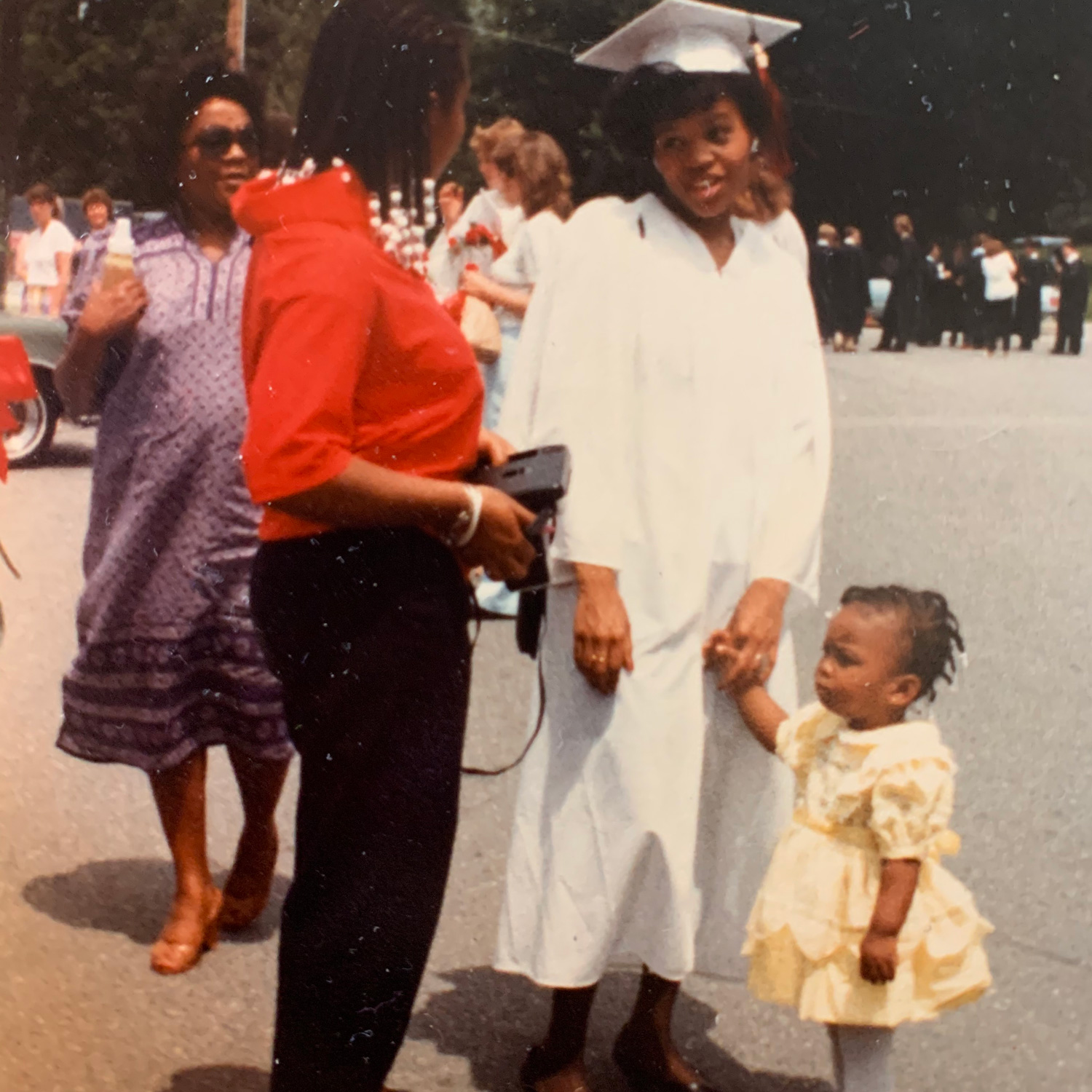
Everyone needs support. Once a scared, pregnant teenager, Janey is now a grandmother of a college student who sometimes needs reminders to ask for advice when he needs it. The President of the United States, she reminds him, has special advisors. CEOs have people to check their thinking, particularly if they’re trying to make an important decision.
“Part of what ails us as a society is that we believe in the fairy tale that everyone has done this on their own,” she says. “It’s just not true. Social networks have always mattered.”
EMPath normalizes the idea that all of us, not just teen moms or individuals struggling with homelessness, need someone to talk to. Recently named an , she is looking forward to “having 19 mentors that I can talk to and see what they’re experiencing, and how they overcome this, and what was their strategy around that.”
found the median net worth for white households in Greater Boston was $247,500 dollars, compared to a mere $8 for Black households. Just last month, revealed that less than half of Massachusetts’s third graders are proficient in reading. EMPath will continue to combat these grim statistics for the next 200 years, or as long as it takes.
This story originally published on Early Learning Nation and is now archived on Â鶹¾«Ʒ. Learn more here.
Mark Swartz writes about efforts to improve early care and education as well as developments in the U.S. care economy. He lives in Maryland.
