
Facing Facts, Finding Solutions in the Race Against Black Postpartum Depression

;)
Education news and commentary, delivered right to your inbox.
Sign up for Â鶹¾«Ʒ newsletter.
For babies to have the best start in life, they need to form a deep emotional bond with the person who provides most of their care — usually their mother. Not every baby gets that chance. Sometimes it’s as simple as a mother wrestling with the “baby blues” — feeling so worried and fatigued she can’t think of much except when she’ll get some shut-eye. About 80% of new mothers experience some version of baby blues, which subside on their own within a couple of weeks with both mom and baby no worse for the wear.
For other mothers, though, the feelings of sadness, exhaustion and anxiety run much deeper and can overtake the woman’s ability to care for herself or her family. This deep level of stress has a medical diagnosis — postpartum depression (PPD) — and it is treatable: Medical guidelines recommend counseling and possibly antidepressants for all women experiencing it. Untreated, PPD can have serious consequences for both mother and child and can even spiral into psychosis where the mother may be a danger to herself or her baby.
Medical treatment recommendations don’t matter if women suffering PPD never receive that diagnosis, are not able to access care or are constrained from seeking help by culture and family standards — as is particularly the case for African American and low-income mothers.
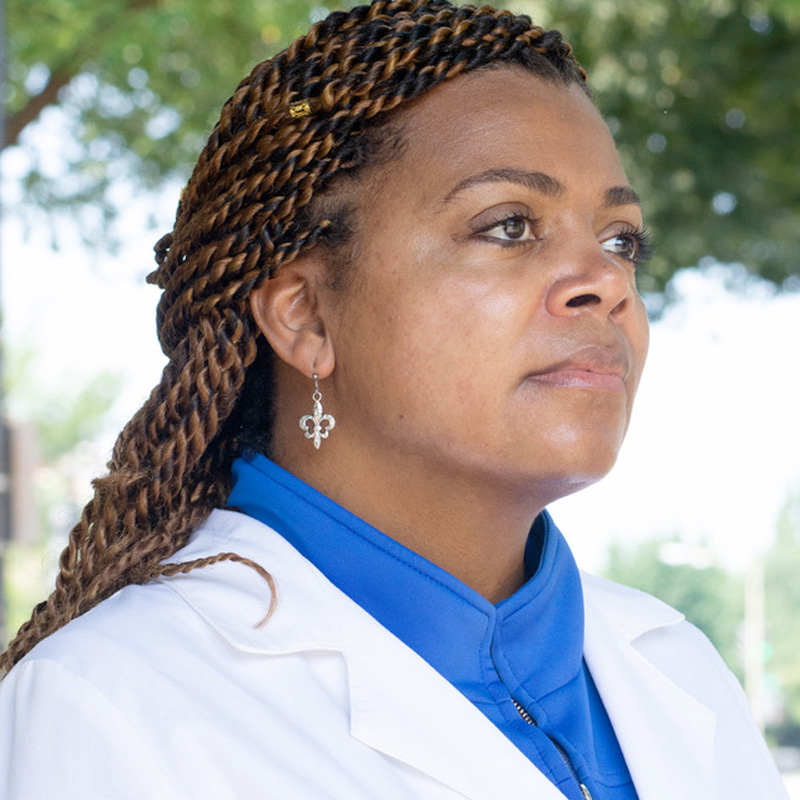
About one in seven women in the U.S. develops postpartum depression, or about 15% of American women. For Black women, the risk is much greater, says Dr. Joia Crear-Perry, an OB/GYN who is the founder and president of the , dedicated to eliminating racial disparities in birth outcomes and a co-founder of .
“For Black women, the risk is almost twice that — and that’s just the people we know about,” Crear-Perry says.
For Black women dealing with PPD, seeking help can be particularly fraught with cultural and familial expectations, she says. The Strong Black Woman ethos has served African American women for many generations, describing and affirming the fortitude they’ve needed to prevail in the face of countless challenges. When it comes to childbirth, however, that same strength-based identity can isolate a woman just at the moment she needs the most support, authenticity and connection.
Postpartum depression is not caused by something the mother is doing or failing to do. Though the causes are not entirely clear, the mood disorder likely results from a combination of physical and emotional factors. Chemical changes take place in a woman’s brain after childbirth as hormone levels drop drastically. This chemical seesaw creates mood swings that can set everything in the mother’s life off balance. Fragmented sleep is a major contributor to postpartum depression — from getting up every two hours to feed the baby to chemical changes in the mother that keep her brain so revved up sleep becomes impossible. The result can be an unrelenting exhaustion that feeds on itself and creates a dangerous downward spiral.
“There is a lot of shaming and stigma around mental health,” Crear-Perry says, “and a great deal of stigma about being seen as weak for having to ask for help. We’re supposed to be able to take care of our families, to keep it together and keep marching, right?”
Overcoming that internal and external judgment can feel out of reach to depressed mothers, and even their best intentions can be thwarted by knowing implicitly if not explicitly that as a woman of color, the cards are stacked against her. According to the , women in the U.S. are more likely to die from childbirth or other pregnancy-related complications compared to women in other developed countries. The data show that Black women are three to four times more likely to die from pregnancy-related death than their non-Hispanic white counterparts, and research shows that half of these deaths — primarily from hemorrhage and hypertension — are preventable. Pregnant Black women are to be murdered by their intimate partners than white women. And according to the National Institutes of Health, Black mothers are several times more likely to suffer from PPD but less likely to receive treatment and follow-up.
“To be clear,” says Crear-Perry, “those statistics aren’t because of physiological differences. Being Black isn’t a risk factor for illness, death and depression — being exposed to racial bias is the risk factor.”
According to the , this bias disproportionately affects the quality of care mothers receive during childbirth; research has shown that doctors spend less time with Black patients and the care Black mothers receive is less effective. Providers are less likely to believe Black women’s self-reporting of pain and support their breastfeeding, and more likely to ignore their symptoms and dismiss their complaints. Education, socioeconomic status and even fame offer no protection from the bias Black women encounter, demonstrated by high-profile stories such as tennis superstar health catastrophe and the death of Shalon Irving, an epidemiologist at the Center for Disease Control and Prevention.
The reports that Black women were less likely than white women to initiate mental health care after delivery and more likely to put off seeking treatment longer after the child’s birth. Early detection and treatment can reduce the negative impacts of the illness, but even in that regard, Black women who started treatment were less likely to receive follow-up or continued care compared with white women who initiated treatment. The study reported that Black women generally preferred psychotherapy over taking antidepressants, but for many, getting psychological services can be nearly impossible because states are not required to offer those benefits in their Medicaid plans.
Some African American women suffer in silence because they are afraid of being reported to child protective services if they admit that they are having trouble caring for their children. There’s reason for worry: Numerous studies have shown that child welfare workers are more likely to deem Black mothers unfit to care for their own children and to recommend that the children be removed from their home. According to Child Welfare, two Texas studies found that while Black families on average tended to be assessed with lower risk scores, they were 20% more likely to have their case opened for services, and 77% more likely to have their children removed instead of being provided with family-based safety services.
“So, if you’re worried about someone taking your baby from you and about not being listened to by your doctors and all these other concerns, that makes you even more depressed, right?” says Crear-Perry. “Especially if you’re substance abusing and need help, you worry about trying to get treatment because they’ll take your baby.” Small wonder that fewer than 15% of African American woman with PPD seek professional care.
Altering this complex situation will take nothing less than a transformation of multiple systems in U.S. society — medical, social and political — and a number of non-profits and professional groups are working toward those ends. In the meantime, Crear-Perry says two of the most effective solutions are deeply rooted both in culture and in history: midwives and .
“Childbirth is not a medical phenomenon,” she says. “It has been medicalized, but prior to it becoming white men anesthetizing you and pulling the baby out with forceps, it was indigenous. Even if the role wasn’t called a ‘doula,’ there was someone to care for the mother and support her throughout her pregnancy and birth.
“When I first heard ‘doula,’ it was from a wealthy friend who was pregnant, and I saw it as a thing for rich people. But when you understand what a doula actually provides, doesn’t everybody deserve that support, that person to watch out for them?”
According to , some research shows that one of the greatest triggers for depression is a significant deviation between what a woman expects or plans and what actually happens — whether an unplanned C-section, complications at delivery, a baby with medical issues or difficulties with breastfeeding—particularly with those mothers who do not have support. Supporting the mother through the anticipated and the unforeseen is the work of the doula; caring for mother in a highly individualized way has always been the work of the midwife. Helping the mother get set up for successful breastfeeding is the work of both.
“For Black mothers,” Crear-Perry says, “midwives and doulas aren’t a luxury, they’re the fix.”
This story originally published on Early Learning Nation and is now archived on Â鶹¾«Ʒ. Learn more here.
K.C. Compton worked as a reporter, editor and columnist for newspapers throughout the Rocky Mountain region for 20 years before moving to the Kansas City area as an editor for Mother Earth News. She has been in Seattle since 2016, enjoying life as a freelance and contract writer and editor.
