

;)
Education news and commentary, delivered right to your inbox.
Sign up for 麻豆精品 newsletter.
Top Takeaways is a series of recaps from important conversations, town halls, webinars and virtual events about early learning.
On June 25, the held a webinar on the benefits and risks of bringing artificial intelligence (AI) into early education settings. Ariel Gilreath of The Hechinger Report moderated the conversation, which featured:
- Dana Clarkson,
- Isabelle Hau,
- Michelle Kang,
- Jay Lee, an educator in Oakland, Cal.
- Keri Rodrigues,
- Celia Stokes,
鈥淲hy is AI different from past tech innovations?鈥� asked Gilreath, prompting the panelists to reflect on ways that previous advances were initially regarded as threats, then accepted as inevitabilities.
Here are our takeaways from the illuminating conversation:
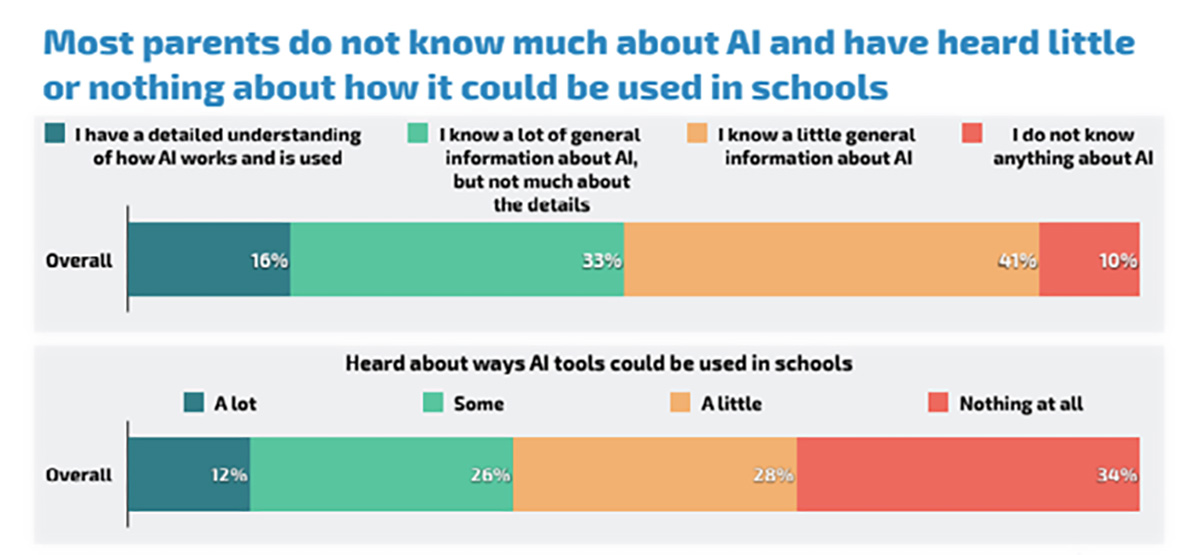
1. The time to confront risks is now. 鈥淚t鈥檚 here,鈥� said Dana Clarkson, 鈥渁nd it鈥檚 not going away.鈥� Supporting this contention, Isabelle Hau cited a finding that 46% of teachers, 51% of parents and 48% of K-12 students report using AI chatbots once a week or more. Adding, 鈥淭here are a lot of risks here.鈥�
Hau mentioned ethical concerns about how data is handled and the domination of the field by large for-profit companies motivated by profit rather than the education of children or well-being of families. Noting that structural biases exist in the language sets that AI draws upon, Michelle Kang said, 鈥淪ource data has to be inclusive.鈥�
Just because the AI genie is out of the bottle doesn鈥檛 mean that it鈥檚 too late for government (and educators and advocates) to hold companies to account and to remain vigilant about the hazards of untested technologies. Keri Rodrigues mentioned the as a leading convener.
(Hechinger Report)
2. Inclusion builds trust. 鈥淢ove fast and break things鈥� used to be a mantra in Silicon Valley, but nobody is that cavalier when it comes to shaping young minds. Celia Stokes argued that technology companies must earn the trust of teachers and families if they expect to play a part in the early educational ecosystem.
Clarkson, a self-described early adapter of AI, recommended including teachers and parents in conversations about when and how it鈥檚 used. She marveled at the ease with which generates stories when users choose characters and setting, and set the reading level.
3. Supporting the workforce is a top a priority. None of the panelists predicted that AI would replace educators, but what if it made the profession more appealing? 鈥淟ess privileged kids need access to human teachers,鈥� Hau reminded viewers, while Kang emphasized the central role of 鈥渟trong relationships between and among educators, families and children.鈥�
The greatest hope might lie in technology鈥檚 potential to relieve administrative burdens, making the job easier and more joyful. 鈥淎I can provide the sketch,鈥� said Kang, 鈥渂ut it takes a human to provide the color.鈥�
Jay Lee mentioned using AI to brainstorm curriculum ideas; in the chat I asked for an example, and he responded: 鈥淧rompting ChatGPT to share developmentally appropriate activities for my classroom based on that week鈥檚 theme. I can even ask ChatGPT to incorporate existing materials we have in our classroom, and can ask it to incorporate potential likes/dislikes/needs that I specifically know. The results can be hit or miss, but it is certainly fun to play with, and it鈥檚 a great partner for brainstorming.鈥�
4. Children will determine how AI unfolds in their lives. With every new technological development, experts weigh in on how and when to bring it into children鈥檚 lives. Time and again, once young children get their hands on the device, they define the terms of use. Clarkson noted that while 鈥淚t鈥檚 difficult for grownups to learn new things, kids are bringing these skills into our classrooms.鈥� Rodrigues concurred: 鈥淟ook in the backseat of every car in America. Look at the booths in the restaurants.鈥�
5. Intention matters. Panelists cautioned educators not to blunder into AI without considering the consequences. 鈥淲hen used intentionally,鈥� Kang said, 鈥淎I can be a valuable tool.鈥�
Stokes envisions a time when AI can help individualize education and support assessment 鈥� by 鈥渨hispering in the ear of teachers in the moment鈥� 鈥� but stressed that it鈥檚 not a replacement for human judgment.
For Clarkson, maintaining the North Star of 鈥渂uilding agency in our learners鈥� can protect institutions and educators from getting carried away with AI鈥檚 dazzling capabilities. That is, we should make sure we鈥檙e using the technology, rather than the other way around.
This story originally published on Early Learning Nation and is now archived on 麻豆精品. Learn more here.
Mark Swartz writes about efforts to improve early care and education as well as developments in the U.S. care economy. He lives in Maryland.
