How Hunger Impacts the Well-Being of North Carolina Students
Roughly 1 in 5 children in North Carolina face hunger. But what does that statistic mean for the well-being of North Carolina’s students?

;)
Education news and commentary, delivered right to your inbox.
Sign up for Â鶹¾«Ʒ newsletter.
Get stories like this delivered straight to your inbox. Sign up for Â鶹¾«Ʒ Newsletter
Roughly in North Carolina face hunger. But what does that statistic mean for the well-being of North Carolina’s students?
Josh Wells, coordinator at Owen Middle School in , sees the tangible toll that hunger can take on students — including falling asleep first thing in the morning, not being able to focus or connect with others, and acting out in class.
“You have a physiological response to being hungry in your body,” he said. “As a young person, that’s going to be very distracting — they’re not going to be able to focus on what’s going on in the classroom.”
Wells shared his perspectives during a recent panel on the connections between food insecurity, mental health, and student well-being organized by the .
In addition to the physiological response to hunger, Wells said there is also a social stigma attached to it. If a student receives an due to school lunch debt, or takes home a bag of food donations for the weekend, it can isolate them from their peers.
One solution to these challenges, panelists said, is no-cost school meals for all students. When all students can eat , stigma is reduced and participation in school meals increases, ensuring all students can access the fuel they need to support their well-being.
Nine states have enacted permanent school meals for all policies, and — including North Carolina — have introduced legislation to do so. Gov. Josh Stein’s for fiscal year 2026-27 calls for universal breakfast at no cost to all students, and state Democratic legislators have that would provide universal breakfast and lunch.
At the same time, the Supplemental Nutrition Assistance Program (SNAP) — which provides food assistance to more than 1.4 million people in North Carolina and to school meals — .
Among other things, the , signed into law in 2025 by President Donald Trump, increased the share states have to pay toward SNAP’s administrative costs. County governments are to owe an additional $69 million in administrative costs.
If the state and counties are unable to absorb these additional administrative costs, SNAP could face reductions or end entirely, threatening food access for hundreds of thousands of households. Stein’s budget calls for $15 million in state funding to ensure North Carolina can continue to operate SNAP.
The impact of food insecurity on mental health
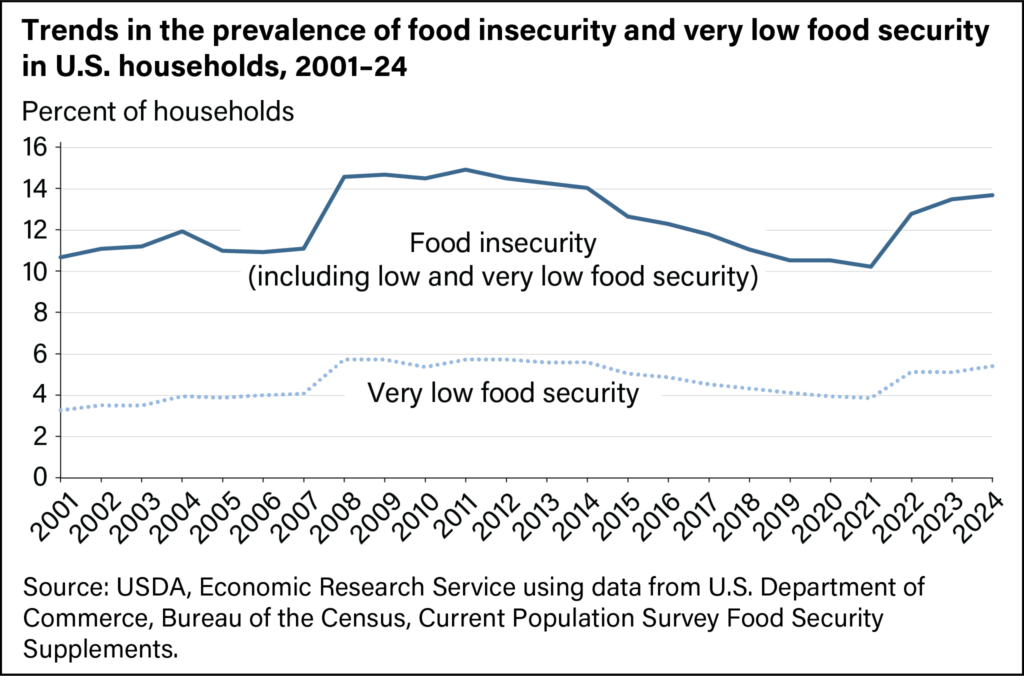
Food security is as “access by all people at all times to enough food for an active, healthy life.” , 14% of all U.S. households were food insecure, and just over 18% of households with children were food insecure.
In a national survey conducted by the U.S. Department of Agriculture — which was in 2025 — those experiencing food insecurity “not being able to afford a well-balanced meal, worrying that food will run out, not eating when hungry, cutting meal sizes or skipping meals, or going a whole day without eating.”
Meena Statz, a licensed clinical mental health counselor also on the panel, discussed the . When children’s basic needs, such as food, are not met, Statz said they can have difficulty regulating their emotions or engaging appropriately in class, which can result in a misdiagnosis.
“You see people who … maybe are misdiagnosed with ADHD or autism or Oppositional Defiant Disorder or anxiety because they are so hungry they’re not able to focus,” she said.
Statz also drew connections between childhood food insecurity and well-being in adulthood, noting that people who grow up experiencing food insecurity experience higher rates of mental health challenges, such as depression and anxiety.
She also said experiencing food insecurity as a child can create a cycle of generational trauma — children inherit the beliefs and behaviors of their parents, which can shape how they eat, shop for food, and feed themselves and their families. Statz said this can manifest in adulthood as an eating disorder, anxiety disorders, and other emotional distress related to food, even for those who are a generation or two removed from experiencing food insecurity themselves.
“Food is scarce, so we have a fear of not having enough food — and we have a lot of trauma around that, and so we’re hoarding food or maybe not eating as much,” she said.
The impact of free school meals on family well-being
Even before meals were provided for free to all students at Owen Middle, where Wells works, he said cafeteria staff worked diligently to ensure students receiving free or reduced-priced meals were not stigmatized from their peers.
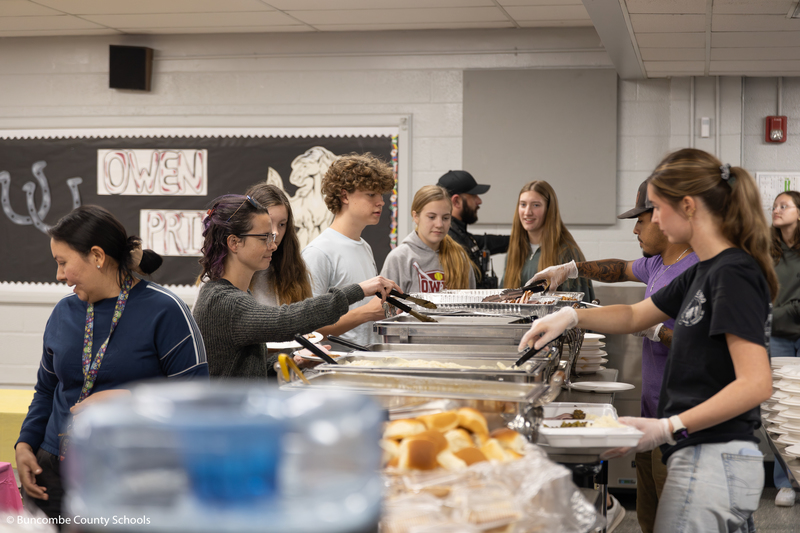
But the cost of paying for meals still created a burden for some families, Wells said. Over time, students would rack up school lunch debt.
“That is an additional cost that our families really struggle with sometimes, whether it’s paying for the food at school or having to pack lunch,” he said.
That all changed when Owen Middle began offering free school meals to all students through the federal Community Eligibility Provision. Wells said he has seen the impact of free meals, not just on students, but on their caregivers who experience relief now that they no longer have to worry about the cost of paying for school meals.
“Without having to stress about that … that allows for those adults to use some of those funds in ways they don’t have to worry about: ‘Do I pay the light bill or buy food?’” Wells said.

Beyond school meals, Owen Middle also hosts community nights on Thursday evenings, inviting any family with K-12 students to enjoy a free catered meal with games, music, and access to tutoring. Wells said these events have helped build trust between the school and its families and have made families feel more comfortable asking for help with other needs they are experiencing.
The community nights also foster social connections between parents and students who may not otherwise know each other and allow families to connect with teachers in a relaxed, positive environment.
“By simply having some food, breaking bread together, and sitting next to each other — not asking our parents to do anything, just to come and be — we’ve absolutely seen that connection and that safety and that trust network build and build,” Wells said. “Our school building is not just a place where our parents and adults send their kids, it’s a place that they can also come.”
This first appeared on and is republished here under a .
Did you use this article in your work?
We’d love to hear how Â鶹¾«Ʒ’s reporting is helping educators, researchers, and policymakers.