Texas School District Returns Illustrated LGBTQ Memoir to Library Shelves Following Public Review

;)
Education news and commentary, delivered right to your inbox.
Sign up for 麻豆精品 newsletter.
Canutillo Independent School District will return an LGBTQ-themed book to its high school library following a formal review into a parent鈥檚 complaint that the graphic novel was inappropriate because it contained sexually explicit content.
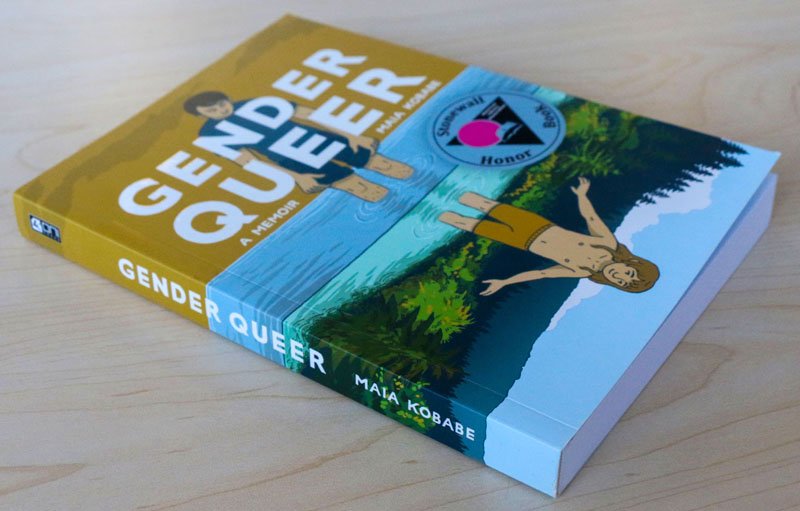
A nine-member committee of educators, librarians and parents voted 8-1 Tuesday for author Maia Kobabe鈥檚 鈥淕ender Queer: A Memoir鈥� to remain on Canutillo High School library鈥檚 shelves for students to check out, the district announced Wednesday.
鈥淭he committee carefully examined the content of the book based on a rubric to determine factors such as its artistic quality and/or literary style; age appropriateness of the subject area; ability for readers to gain an awareness of a pluralistic society and capacity to provide information to motivate students and staff to examine their own attitudes and behavior to make informed choices in their daily lives,鈥� the district said in a statement.
鈥淕ender Queer鈥� is one of a handful of books parents and conservative state lawmakers across the country have attempted to ban from public schools. Most are written by LGBTQ authors and writers of color and explore gender, sexuality and systematic racism.
鈥淕ender Queer鈥� chronicles Kobabe鈥檚 journey to identifying as nonbinary and asexual. Its publisher, Simon & Schuster, as 鈥渁 useful and touching guide on gender identity — what it means and how to think about it — for advocates, friends, and humans everywhere鈥� and recommends it for readers in 10th grade and above.
Canutillo administrators temporarily pulled the district鈥檚 sole copy from the high school library鈥檚 shelves in late October after parent Breanne Barnes filed a formal objection, or challenge, seeking to remove it from the library鈥檚 collection. The school principal appointed the nine members of the reconsideration committee who read the book in its entirety.
Barnes her objection had 鈥渘othing to do with LGBTQ versus heterosexual content鈥� but rather with the book鈥檚 鈥減ornographic鈥� images and descriptions, which include depictions of oral sex and masturbation.
Barnes could not be immediately reached Wednesday for comment about the committee鈥檚 decision. She previously indicated she would not be satisfied until the book is permanently removed from the library, and would possibly file a grievance with the school board.
At least one Texas district has pulled Kobabe鈥檚 book from its library shelves without going through a formal book reconsideration process. The Keller Independent School District, which is near Fort Worth, after a parent鈥檚 Twitter post that called the book 鈥渓egitimate visual porn鈥� gained traction.
Texas Gov. Greg Abbott highlighted that decision in a Nov. 8 letter to state education officials urging them to develop 鈥渟tatewide standards to prevent the presence of pornography and other obscene content in Texas public schools, including in school libraries.鈥�
Texas Library Association鈥檚 President-Elect Mary Woodward said pornography is not in school libraries.
The Katy Independent School District outside Houston five books the district described as 鈥減ervasively vulgar,鈥� many of which feature LGBTQ relationships The North East Independent School District in San Antonio has more than 400 books from circulation while they are reviewed by librarians for appropriateness after having been flagged by a state lawmaker.
Neither district is going through the book reconsideration committee process.
The National Coalition Against Censorship denounced actions like this, which it said violate students鈥� First Amendment rights.
鈥淭he law clearly prohibits the kind of activities we are seeing today: censoring school libraries, removing books — and entire reading lists — based on disagreement with viewpoint and without any review of their educational or literary merit,鈥� the NCAC said in a Wednesday that more than 600 organizations, publishers, bookstores, librarians and authors signed onto, including Kobabe.
鈥淟ibraries offer students the opportunity to encounter books and other material that they might otherwise never see and the freedom to make their own choices about what to read,鈥� the statement continues. 鈥淒enying young people this freedom to explore — often on the basis of a single controversial passage cited out of context — will limit not only what they can learn but who they can become.鈥�
This first appeared on and is republished here under a Creative Commons license.
Did you use this article in your work?
We鈥檇 love to hear how 麻豆精品鈥檚 reporting is helping educators, researchers, and policymakers.