Below is the complete archive of Â鶹¾«Ʒ- live blog of the 2016 Republican National Convention. (See our DNC coverage here) We will be covering national and state-level education issues leading up to Election Day at our #EDlection2016 page — sign up for Â鶹¾«Ʒ newsletter to get all our campaign updates.
12:15 a.m. Friday
Education at the RNC? Not so much. Why the GOP doesn’t seem all that interested
Although it was light on ideas, the four days of the Republican National Convention were nevertheless exciting at times. A few states staged a walkout in an attempt to secure a roll call vote. From Florida to Washington, we debated what does or does not count as plagiarism. We pretended to be a grand jury during a mock indictment of Hillary Clinton. And finally, we heard over and over from the Trump family.
READ: Full text of Donald Trump’s nomination speech at the GOP convention
— The Hill (@thehill)
Much to the chagrin of wonks like me, and really anyone who wants to get a sense of what a Trump White House might look like, 10-point plans and policy ideas were afterthoughts. And given the central role it plays in just about every area of American life, even more disappointing was the fact that education policy was such a fringe issue. Schools barely received any mention at all.
But benching education isn’t all that surprising these days. Looking back at the last few presidential races, education took a backseat to other issues such as the economy, national security, or entitlement reform. This isn’t to suggest that America’s education problems are few or less important. Quite the contrary. But because in the last few races candidates just haven’t been prioritizing them. Can anyone remember Mitt Romney’s or John McCain’s thoughts on how to improve our schools?
This conspicuous absence is a function of the GOP’s inability to develop new policy ideas that will increase school quality, close achievement gaps, and expand access to college and good jobs. Of course that’s not to say Republicans don’t have any ideas to improve education. Rather, that those ideas have a hard time taking root as they run afoul of an increasingly popular and narrow vision of conservativism.
So what do you do when you’re limited by your own party’s ideology? You get back to your sweet spot; to the things with which you are comfortable. For the Republican Party, that’s traditionally states’ rights, choice, and free market principles. And this year they’ve added nativism and uncritical American exceptionalism.
Stop me if you’ve heard this before.
These are the very same ideas they put forth to improve the job market, the healthcare system, or international trade. The list goes on.
It’s not that school choice is a bad idea, or that states don’t have a central role to play in improving American education. They do. But the discussion of these policy ideas have become too rigid and too simplistic. They’ve swung too far backward. In the face of today’s challenges facing our schools, simply pushing competition is stale and unproductive.
Students have gotten lost in the GOP’s rush to get back to their core values of free markets and competition.
Take Donald Trump Jr.’s speech—perhaps the finest of the convention and the one with the most extensive discussion of education (about three paragraphs). He rightly diagnoses the problems: the children of billionaires have opportunities that other children don’t. But, in prescribing remedies, he just reaches back into the same depleted bag of old and tired tricks:
“Our schools used to be an elevator to the middle class, now they’re stalled on the ground floor. They’re like Soviet-era department stores that are run for the benefit of the clerks and not the customer, for the teachers and the administrators and not the students. You know why other countries do better on K through 12? They let parents choose where to send their own children to school. That’s called competition. It’s called the free market.”
It’s no wonder Trump Jr.’s speech alludes to the U.S.S.R. The ideas he puts forth are just as old and just as outdated.
For a number of reasons, free market principles cannot be responsibly applied wholesale to our public schools. Even though Donald Trump promised in his lengthy acceptance speech to “rescue kids from failing schools by helping their parents send them to a safe school of their choice,” a parent’s ability to make the “best” choice is influenced by so many different factors. Unfortunately, those factors are so often based on poverty, race, gender, immigration status, and disability. In other words, some people – those with economic and social advantage – are the ones who can choose the good schools. The rest are left to pick-over the remains. Obviously, that is not a solution to education inequity. Instead, it reproduces it.
What’s more, the idea of schools competing seems antithetical to the larger goal: providing all students with a high-quality education. In competition there are of course, winners and losers. So, to advocate for school competition is to agree – at least tacitly – that it is natural and good that some students receive a great education, while others receive a poor one.
It’s hard to square Trump’s promises and rhetoric with the policies the Republican Party is putting forth. In last night’s acceptance speech, Trump declared he would make every decision only after considering whether it was in the best interests of the children in Baltimore and Ferguson. It sounds nice. But, when the rubber meets the road, his policies don’t support the interests of the children he claims to want to serve. For example, expanding school choice in Baltimore won’t make the schools families can choose from any better. Choosing between only bad options is no choice at all.
We need the GOP to have better ideas if we are going to improve our schools.
But, I don’t want only to pile on Republicans. Democrats will have their turn – the Democratic National Convention is next week. And, at this point, they seem also to have retreated to their ideological corner. As others have documented, the party turned its back on a number of previous priorities that would have led to improved education for students. Now, Democrats are opposed to using student performance to evaluate teachers. So if student success isn’t related to teachers, then what is? They are also opposed to closing schools due to ongoing poor student performance. Weird. Is there a better reason to close a school than the fact that its students aren’t learning?
Like the GOP, Democrats are rolling back the clock and rolling out ideas with too little tread left on the tires.
At first glance it seems like there cannot be much agreement between these two disparate positions — between a blind faith and reliance on the market, on the one hand, and on the other an equally blind faith that educators should be self-regulating and can improve schools their own. But with a closer look, there is a fertile middle ground where Republicans and Democrats can worry less about free markets or union contracts, and instead focus on students. Prioritizing students — making sure they all have the opportunities Trump’s children had — can be a unifying force. Then we can, together, make real the idea we all espouse to believe in: that a child’s education should not be a function of zip code. Hopefully we have the courage.
— Max Marchitello (& )
6 p.m. Thursday
Donald Trump’s dystopian future for education
Finally, Donald Trump’s acceptance speech is here! Some conservatives have been looking forward to this for months. Others, led by the recently defeated #DumpTrump movement, have been dreading it. But for both sides, it will be good to learn more about what a Trump Administration might look like, and his plans to move America forward.
The problem, however, is that Trump lacks a positive vision for the country. Aside from kicking immigrants out, making better deals, and bringing back winning, Trump’s plans are a mystery. Perhaps even to himself.
But that is OK, since he will hire the . For K-12 education policy, that could refer to Trump’s top policy adviser and head of his transition team: beleaguered New Jersey Governor Chris Christie.
This would be a disaster.
Christie’s recent big idea on education is to take millions of dollars away from New Jersey’s poorest communities and give them to those who are financially much better off. To make it worse, he calls this The basic idea is that all students, regardless of their family’s financial circumstance, should receive exactly the same amount of school funding.
If Trump takes this policy national, federal education funding would be stretched well beyond its limit. As a result, low-income students and students of color would lose billions.
As the graph below shows, districts with the highest concentrations of poverty would lose on average $200 per student, while the most affluent districts would on average gain around $220 per student. Under this plan, districts in which over half of their students are low-income would lose about $400,000 on average. Districts with over 75 percent student poverty would lose almost $800,000.
The results are far more serious in large urban school districts with high rates of student poverty. For example, over 85 percent of students in Philadelphia are eligible for free-and reduced-priced lunch, but this proposal would take away over $1,300 per student. Just outside Philadelphia, in Lower Merion School District, where only 8 percent of its students qualify for free-and reduced-priced lunch, the district would receive an additional $250 per student.
The results are even worse for communities of color.
As the graph below shows, if this proposal were federal law, school districts with the highest percentages of students of color would lose on average around $230 per student. Therefore, school districts would actually receive more money per student as the percentage of white students increases.
America’s future is built in the schoolhouse. And, if Trump is serious about making America great again, he will have to develop education proposals far better than this.
— Max Marchitello (& )
5:15 p.m. Thursday
Outside the RNC: Cleveland charter leader on why ‘both sides don’t like us’
John Zitzner is something of an anomaly in the charter school world.
“Our mantra has always been that we don’t care what the label is, we don’t care if it’s district or charter, but we want to promote high-quality schools,” he told Â鶹¾«Ʒ in a sit-down at the offices of Breakthrough Schools, a large charter management organization in Cleveland. (See Zitzner’s recent )
As president of Friends of Breakthrough Schools, the nonprofit supporting the charter group, Zitzner works closely with the Cleveland Metropolitan School District.
The two share information and professional development opportunities and, thanks to a, Breakthrough students’ test scores are reported among district results while Breakthrough shares city tax revenue. Zitzner also sits on the executive board of the, a group funded by the Bill and Melinda Gates Foundation that promotes district-charter cooperation.
Breakthrough’s longstanding partnership with the district, and its emphasis on quality over school model, has left the network with few friends in state politics, Zitzner said.
“We go down to Columbus and both sides don’t like us,” he said.
As elsewhere, Ohio Democrats typically take their cues from teachers unions in opposing charters, he said, while Republicans are more invested in absolute school choice than quality, he said. Other charters aren’t supportive because Breakthrough disavows the orthodoxy that all charters are beneficial for kids.
“We had a target on our back from some of the charters that were not necessarily preaching quality…They would call us anti-choice, anti-school choice, because we didn’t say all charters are good. And then you’ve got the D’s [Democrats], we have the bullseye on our back because we were pro-school choice,” Zitzner said.
Similar issues have percolated for years at the federal level.
Democrats in Washington are often suspicious (though he notes that the Obama administration officials have been huge supporters) and critical of poor-performing charter schools that receive federal aid. Many Republicans, meanwhile, want to remove education from federal oversight; Zitzner counters that Breakthrough wouldn’t have been able to expand to 12 schools from its original four so quickly without federal grants.
But while each party presents challenges to the growth of quality charters, they are also both amenable in other ways: Zitzner works to keep Democrats focused on the need for equal opportunities among all students; for Republicans, the emphasis is on parental choice, he said.
“We’re trying to get both sides of the aisle talking about this, but in terms of the presidential election, I have nothing good to say about it,” Zitzner said.
— Carolyn Phenicie (& )
4:30 p.m. Thursday
Detention for you, Mr. Trump: How a teacher would handle a bully like Donald
What are we to tell our kids about Donald Trump? When he has spent so much of the past year saying things, doing things and thumbing his nose at things that we would never tolerate from a teenager in a classroom?
Seriously, what would a Donald Trump disciplinary record look like?
Infraction: Talking out of turn
As reported by : “After Mr. Trump repeatedly interrupted questions about his plan to ban Muslim immigration from the [MSNBC’s “”] co-host Mika Brzezinski, for not allowing the hosts to ask the candidate questions and, finally, threatened to send the program into a commercial break if Mr. Trump did not stop speaking.
“Go to break, go to break right now,” Mr. Scarborough eventually demanded.
When Mr. Trump kept talking, Mr. Scarborough interrupted him: “Hold on, Donald. You got to let us ask questions. You can’t just talk.”
Mr. Trump kept talking anyway. “I’m not just talking,” he said.
As the exchange intensified, a clearly displeased Mr. Scarborough repeatedly tried to stop Mr. Trump from speaking over him.”
Punishment: No national TV appearances for a week.
Infraction: Bullying
As reported by : “When the anchor throws to Carly Fiorina for her reaction to Trump’s momentum, as the camera hones in on Fiorina. ‘Look at that face!’ he cries. ‘Would anyone vote for that? Can you imagine that, the face of our next president?!’ The laughter grows halting and faint behind him. ‘I mean, she’s a woman, and I’m not s’posedta say bad things, but really, folks, come on. Are we serious?’”
Punishment: A 5-page paper on the feminist movement.
Infraction: Truancy
As reported by : “This wasn’t the first time Trump opted to . In January, Trump refused to participate in a debate after accusing network host Megyn Kelly of unfair coverage. Trump instead opted to hold a competing event where he could set the terms of engagement, ensuring that he would not face any kind of awkward confrontation.”
Punishment: Detention with Ms. Kelly.
Infraction: Failure to complete his homework
When , Trump was caught unprepared for the pop quiz:
Trump’s fluent discussing media moguls with . As for Brexit:
— Michael Calderone (@mlcalderone)
Punishment: A 5-minute presentation on the history of the European Union.
Infraction: Lying
Of all the Trump statements analyzed by the fact-checking group PolitiFact, . Over half of Trump’s statements were scored as lies.
PolitiFact uses six different categories to measure the truthfulness of statements, ranging from “true” to “mostly false” to “pants on fire.” Trump’s statements were 18 percent “mostly false,” 39 percent “false,” and 19 percent “pants on fire.” President Obama, by comparison, only had 12 percent statements that were “mostly false” and “false” and 2 percent that were “pants on fire.”
Punishment: Chalkboard, “I will not make things up” 100 times.
It’s been quite the week in Cleveland — four days of matching lanyards, plagiarism denials, moody bickering and endless gossip. I can only imagine that everyone is also a little sweaty.
The Republican National Convention, it seems, has been a lot like high school.
— Kirsten Schmitz (& )
3:15 p.m. Thursday
Candidates think we can’t handle the complex truth about education
Depending on whom you ask, charter schools represent either the best of things or the worst of things in the modern education system. This binary hero-villain dialogue plays out time and again among education advocates. It’s so pervasive that it even managed to infiltrate a presidential election that has otherwise been light on K-12 education talk.
declared his support for public charter schools, but not private ones in a CNN town hall event last March — belying a fundamental confusion about what charter schools actually are. Last year disparaged charter schools with a blanket statement suggesting that they reject serving students who are the “hardest to teach.” And while decrying the federal footprint in education, said he wants more charter schools because “they work, and they work very well.”
The primary flaw with all of these statements is that each one lacks nuance and ignores what is true, what we know, and what we don’t know about charter schools. After all, one of the hallmarks of political campaigns is the reduction of complex issues to simple binaries. Candidates harp on divisive issues and ask voters to pick a side — for or against, good or bad. While this strategy makes for rousing stump, it misleads and under-informs voters about critical policy issues.
Sanders’ confusion about whether charter schools are public or private schools is not uncommon, but it’s easy to clear up. Charter schools are public schools. They are publicly-funded, and they provide education free of charge. The confusion arises because they are often operated by private organizations (a mix of non-profit and for-profit). Some of these private organizations are very good at running schools that achieve amazing outcomes with kids. Some of them are not as good.
Similarly, by painting all charter schools with the same brush, either negatively or positively, both Clinton and Trump ignore the complex reality of what we know about charter schools. (Clinton, I should note, told the NEA convention earlier this month that we should seek to learn from the many good charter schools – that common sense statement drew boos from the crowd).
In practice, who is served best and most often by charter schools varies significantly from state to state and city to city. And the overall quality of charter schools varies, too. In some cities, like Washington DC, charter schools produce an average of 101 days of additional learning in math compared to the surrounding district schools. That’s a tremendous difference. But in Fort Worth, Texas, charter schools underperform district schools on average.
Attempting to define the whole notion of charter schools as either good or bad encourages us to continue to focus on the existential question of whether we should have charter schools at all. And that is simply the wrong question.
What should we be asking instead? On the charter front, simply put, what do we need more of in the charter sector, and what do we need less of? But answering this question requires determining what charter schools’ successes and failures teach us about what factors promote schools’ ability to produce great outcomes for kids, and the evidence isn’t simple. Charter schools now have the same diversity in quality and norms as other public schools and private schools and don’t lend themselves to simple generalizations any more than those other school sectors.
In education, confusion and distortion is not confined to the campaign trail or the debate about charter schools. Across the sector advocates, activists, the media, and other players fail to engage honestly with education’s complicated realities, and instead manipulate or cherry pick the facts to reflect forced (and often false) choices.
We need a new national conversation about education. The foundation of that conversation must be an accurate understanding of what we know, and what we don’t know, about our education system. Where have we succeeded and failed in measuring student learning? How fair is our school funding system? What do we know about what makes a great teacher?
These are the critical debates essential to charting a rational course forward for our schools, and high-quality research and information must inform these conversations. In an effort to support a shift to a more evidence-driven debate, Bellwether Education Partners has launched a new resource — — that aims to bring together information from disparate, credible resources on a range of topics in education. The hope is that The Learning Landscape will serve as one tool in moving toward this new and much needed conversation.
Whether it’s charter schools or testing or something else, we won’t get to real solutions without working toward a deeper understanding of a system as nuanced and complex as the 50 million students it serves.
— Jennifer Schiess, Associate Partner at Bellwether Education Partners (& )
2 p.m. Thursday
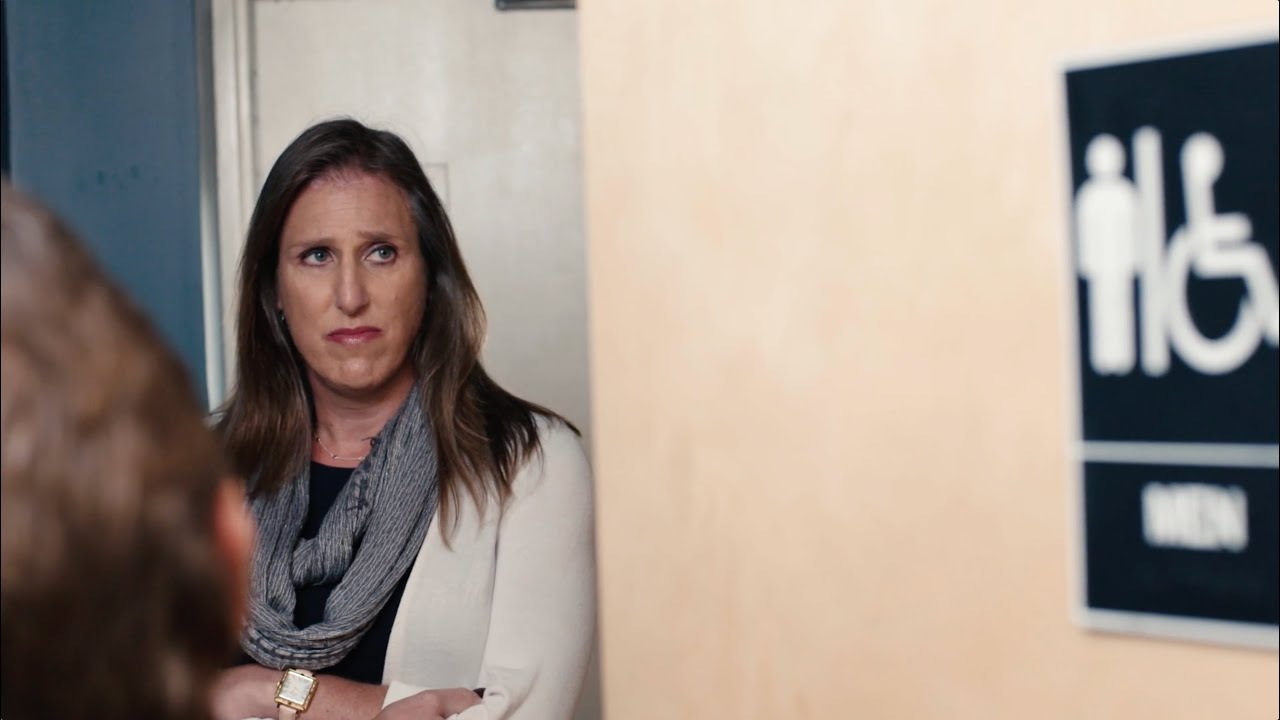
Transgender TV ad scheduled for Trump’s big night at the RNC
LGBT advocates are looking to reach and persuade conservative voters tonight with a prime-time TV ad about transgender discrimination that’s set to air on Fox News around the time Donald Trump is accepting the Republican party’s nomination for president.
The ad from North Carolina who is prevented from using a restroom that corresponds with her gender identity —&²Բú²õ±è;calling out the controversial state law that bars people from using restrooms that do not correspond with the gender on their birth certificates. However, the ad also speaks to debates — and lawsuits — that have boiled up in schools across the country. One of those lawsuits, filed against a school district in Virginia, is currently being considered by the U.S. Supreme Court.
Despite a GOP the Obama administration’s take on transgender student rights, Donald Trump’s stance on the issue is somewhat unclear. At first, the presumptive Republican presidential nominee appeared to drift away from the Republican base, Americans should be able to use whichever bathroom they feel comfortable with.
But he later backed away from that stance, TV personality Jimmy Kimmel states should be able to decide on their own.
The stance of Trump’s running mate, Indiana Gov. Mike Pence, is far more straightforward. Pence became a household name when he signed a “religious freedom” bill in 2015 that said religious business owners were not required to participate in same-sex weddings, a stance opponents called discrimination against LGBT customers.
Throughout his time in office, the Obama administration has played a big role in extending protections for LGBT students — from the “It Gets Better” anti-bullying campaign to guidelines for schools to address transgender bathroom issues.
A joint “dear colleague” from the U.S. Departments of Education and Justice delivered in May said Title IX, which prohibits sex discrimination in educational programs, applies to a student’s gender identity. The Department of Education also released a set of guidelines.
“This means that a school must not treat a transgender student differently from the way it treats other students of the same gender identity,” read the letter. “The Departments’ interpretation is consistent with courts’ and other agencies’ interpretations of Federal laws prohibiting sex discrimination.”
In response, the guidelines another example of federal overreach: “I have long believed that education is a state and local function. Policies regarding the security and privacy of students in our schools should be in the hands of Hoosier parents and local schools, not bureaucrats in Washington, D.C. The federal government has no business getting involved in issues of this nature.”
Last week, a Virginia school board called on the U.S. Supreme Court to by the Fourth U.S. Circuit Court of Appeals, which ruled the school district’s bathroom policy violated Title IX when officials said high school junior Gavin Grimm, who was born female but identifies as male, was barred from using the boys’ restroom.
— Mark Keierleber (& )
12:35 p.m. Thursday
Getting schooled on money at the RNC and the DNC
Teaching American school children about money —&²Բú²õ±è;from personal finance to the world economy —&²Բú²õ±è;has been the mission of the for the past 67 years. The nonprofit is a regular presence every four years at the GOP and Democratic national conventions where it uses the gathering to inform influencers on the level of financial literacy in the nation’s schools and asks the question, “Is Your State Part of the Problem —&²Բú²õ±è;or Part of the Solution?”
The council holds its discussion at 2 p.m. today in Cleveland and theirs may be one of the only bipartisan events in town. Their session at the Democratic National Convention is Monday. Host committee members for the CEE include Democratic New York Sen. Chuck Schumer and Republican Mississippi Sen. Thad Cochran.
“Building financial capability for America’s students is about giving them skill to build a bright future for themselves — that is certainly something we can all agree on.,” said Nan J. Morrison, CEO and president of CEE. “The conventions offer us the opportunity to speak directly to engaged citizens and offer them actionable items they can bring back to their home states.”
The panel will drill down on the council’s 2016 showing that only 17 states require high school students to take a course in personal finance. Data shows that teens who do learn about money have better credit scores and are less likely to default on their personal debt as adults.
CEE says it currently reaches teachers and students in all 50 states — annually training approximately 55,000 educators in person throughout the country, who in turn teach about 5 million students.
Closing the widening financial knowledge gap is seen by CEE as key to closing the income inequality gap. Read about one award-winning teacher in Pine Bluff, Arkansas who is using reality TV to make financial lessons come alive for her students and test your own .
—Kathy Moore (& )
11:45 a.m. Thursday
Could Donald Trump make Social Security great again — and win over 7 million voters in the process?
Donald Trump has promised to make America great again. One thing he says he won’t look to change? Social Security. While maintaining the Social Security status quo might seem at the very least unobtrusive, it neglects an opportunity to extend coverage to the over and 6.5 million government workers whose jobs go uncovered.
On February 29, Georgia rally attendees, “we’re going to save your Social Security without making any cuts. Mark my words.” He made at an April rally in Wisconsin — both states, interestingly enough, extend social security coverage to only of their teachers — and spoke favorably (though without specific recommendations) about preserving the program in a statement to . Though no official stance on the topic appears on his , and recent adviser seem to hedge toward cuts, let’s assume Social Security under Trump remains as is. He’s missing — perhaps not for the first time — an opportunity for real greatness.
While existing state pension plans aren’t offering all workers adequate retirement , Social Security at least offers them a solid floor of benefits. Expanding Social Security would help millions of uncovered workers, including all teachers in California, Illinois, and Ohio (where Trump will be accepting his party’s nomination tonight). Further, universal Social Security coverage would actually by 10% — yes, reduce — by more evenly distributing the program’s legacy costs. While Social Security isn’t designed to take the place of a stand-alone retirement benefit, it would provide all teachers with a much deserved and too often missed baseline of secure, nationally portable retirement benefits.
Neither candidate has broached the idea of universal coverage, though Hillary Clinton has proposed its by increasing benefits for high-need groups, including widows and caretakers. Trump has yet to commit to any one approach – only promising not to make cuts. But to this point neither Clinton nor Trump has taken any steps towards addressing the benefit coverage gap that impacts millions of educators, many of whom will ostensibly head to the polls in November.
— Kirsten Schmitz (& )
7:45 a.m. Thursday
Night 3 at the RNC: Would a VP Pence reach across the aisle? Just look at how he worked with Indiana’s top Democrat on education
Last night, Donald Trump’s running mate Mike Pence admitted to the Republican National Convention audience that he started his political career as a Democrat. In fact, he John F. Kennedy.
Given his experience on the other side of the aisle, one might assume that Pence would value bipartisan cooperation. But his razor-sharp line of attack against Hillary Clinton Wednesday evening, and his tumultuous working relationship with Indiana’s highest-ranking elected Democrat, Glenda Ritz, suggests otherwise.
It’s no secret that Ritz, Indiana’s State Superintendent of Public Instruction, and Pence have disagreed on education policy. Some go as far as saying the two have been , often leaving education leaders and practitioners in Indiana unsure of where the state is headed on issues affecting students in the Hoosier state.
The dysfunctional relationship was on display recently when Pence and Ritz disagreed over whether to hold teachers accountable for student achievement during the transition to new state assessments. Pence originally rejected the idea, only later to and align with Ritz on a proposal she presented more than a year earlier — but not before alienating teachers by leaving them in the dark about the future of their evaluation process.
Granted, Pence and Ritz were working on rocky ground from the start. It began when Ritz the state’s previous Superintendent of Public Instruction, Tony Bennett, a Republican. As a former elementary school librarian and president of her school district’s teachers union, Ritz was backed by the state’s teachers union, which opposed many of the policies state Republican leaders had been working to institutionalize. But from the moment Ritz was elected, Pence dug his heels in, that the state’s education overhaul started under Bennett would not be undone.
And so the impasse began. In their first year working together, Pence signed an executive order to an agency that viewed as an attempt to bypass Ritz’s decision-making power. The agency, named the “Center for Education and Career Innovation,” had the vague goal of “improving collaboration among Indiana’s public, private and nonprofit education and workforce partners by aligning education and career and workforce training efforts.” Republican legislators and business leaders as a way to coordinate disparate agencies; teachers unions and Democrats viewed it as the state’s second department of education. The agency under heated controversy after less than two years.
Pence’s relationship with teachers unions is — not surprisingly — contentious compared to Hillary Clinton’s (and likely that of her future running mate). Clinton has promised she will be a “” to teachers in the White House. But neither candidate’s relationship is ideal. Collaboration with special interest groups is necessary, but complete agreement often doesn’t produce the kinds of difficult conversations that lead to improved policy.
Politicians need to play nice and collaborate to address the tough challenges facing our nation’s schools. But if the Pence/Ritz saga, and is any indication of the kind of Vice President Pence would be, we’re in store for even more partisan gridlock in a Trump administration.
— Kaitlin Pennington (& )
5:30 p.m. Wednesday
Does Trump nomination mean end of GOP in school reform? It’s complicated
Photo: Getty Images
Spearheaded and signed by a Republican governor, No Child Left Behind passed both houses of congress with . The creation of the Common Core academic standards was backed by a bipartisan coalition of 48 governors and supported by conservative education leaders like Jeb Bush and William Bennett.
Much has changed since then. Republican supporters of the Common Core have all but evaporated in response to political pressure; presidential nominee Donald Trump has strongly denounced the standards; Republicans in Congress to weaken test-based accountability in the new national education law and ensure the feds can’t require teacher evaluations; and the Republican platform criticizes “excessive testing and ‘teaching to the test.’”
Has the long Republican love affair with testing and accountability in education come to an end? Well, it depends on whether you’re looking at national or state policy.
On a federal level, it’s clear that Republicans have deeply soured on any federally driven approach, for several reasons.
The Common Core was seen (mostly incorrectly) as an Obama initiative and new tests of the standards were funded by the administration. Implementation of the standards across the country was met by a surge of resistance to “federal overreach.” Testing grew substantially, driven by new teacher evaluation methods, pushed by the feds, requiring student data. A slew of conspiracy theories and misconceptions about the standards flourished in right-of-center forums and media.
All these factors conspired to make the GOP more hostile to standards-based reform, particularly when it comes from the federal government.
Education policy by and large gets made on the state level, however, and it’s probably too soon to judge how much local Republicans have cooled on these reforms — though support has clearly (if not uniformly) waned.
Take Colorado, a cradle of reform and a good example of how partisan lines have become more confusing than ever. When students increasingly of state tests, the teachers union and conservatives in the legislature to reduce testing. Previously solid Republican support for standards and testing .
By contrast, an effort to remove test scores from Colorado’s controversial teacher evaluation system — which passed in 2010 with significant support from the GOP — by Republicans on the state senate education committee.
In California, where state Democrats have steadfastly opposed test-based accountability for schools and teachers under Governor Jerry Brown, the Republican minority has to teacher evaluation and tenure. Still, the state party Common Core.
In Florida — a stalwart for conservative standards-based reform under Jeb Bush — Republican Governor Rick Scott an aggressive evaluation law in 2011 that incorporated student test scores. Last year lawmakers , signed by Scott, to let districts reduce (but not eliminate) how test scores factor into teacher evaluation and to shrink students’ total testing load. Jeb Bush’s education reform group supported the recent law. The structure of Scott’s evaluation system appears to remain largely intact, however.
These states aren’t necessarily representative of the whole country — and that’s part of the point. Although it’s clear that in many respects both state and national Republicans have backed away from testing and accountability, it’s hard to generalize. Many state-level Republicans are hostile to the Common Core and sympathetic to concerns about over-testing, but in some places there is continued support for teacher evaluation connected to test scores.
Education in the U.S. remain based largely on local and state politics; the evolving Republican position on testing, standards, and accountability will be as well.
— Matt Barnum (& )
4:30 p.m. Wednesday
Reforming with the enemy: Drop ideological swords to make schools better for kids
Center for Education Reform CEO Jeanne Allen sends in this essay:
Donald Trump’s attacks on Hillary Clinton were returned recently at the annual meeting of the American Federation of Teachers, the nation’s second-largest union, and the one representing most of the urban teachers in this country.
“Mike Pence is one of the most extreme vice presidential picks in a generation,” Clinton said. “And he’s one of the most hostile politicians in America when it comes to public education. Neither Mike Pence nor Donald Trump should be anywhere near our children’s education.”
Those words were the equivalent of throwing red meat to the wolves, as the union crowd erupted into cheers, hoots, and hollers.
Similarly, education reformers — activists, donors, lawmakers — are taking sides and reacting across social media, each about their respective outrages.
I understand how it is to feel adamant about a candidate. I have tweeted my way through a political season. But advocates for true education reform must be willing to pass judgment on policy positions before condemning policy proponents.
Such unity hardly seems possible when Clinton’s union supporters are feeding anti-school choice talking points to legions of members that their schools will disappear under a Trump-Pence administration. And Trump supporters organized in the blogosphere use different calling cards to strike a similar fear in parents, focusing on the impact a Clinton administration would have on the hearts and minds of their children, with the loss of local control and teachers unions in charge of the U.S. Department of Education.
Finding any middle path or “common” ground will be hard. And for many ed reformers, the pair of candidates presents a Hobson’s choice.
But it need not be so.
We have, as the saying goes, no permanent allies nor permanent enemies, just a never-ending interest in bettering education. Those who care passionately about education should be willing to work with anyone who is equally as passionate.
It doesn’t mean they will get your vote. But we need their ear now, and we need an open door with whoever wins. We must be willing to recognize any candidate that supports the core policies and principles of education innovation and opportunity, or call them out for their opposition, no matter who they are or what they espouse on other issues that may be near and dear to our hearts.
Why? Because history shows us that this is how we succeed.
The development of education reform is rich in strange bedfellows that locked arms in and outside of elections. People came together on policies that disrupted the status quo, recognizing that the most important issue facing our country is the education of our youth.
Wisconsin state Rep. Polly Williams was a member of the Black Panthers. She was also a partner with Conservative Republican Gov. Tommy Thompson to make vouchers a reality for poor children in Milwaukee and pave the way for greater school improvement throughout Wisconsin.
The fact that Democrats once called Pennsylvania Gov. Tom Ridge every name in the book didn’t stop state Rep. Dwight Evans, an African-American Philadelphian who is now in line to enter Congress, from uniting with Ridge to create the state’s charter school law. Republicans fought against it to preserve local control, and Democrats fought against it to preserve the current system’s power. Sound familiar?
And in Cleveland, where the Republican Party is current perched, the late great City Councilwoman Fannie Lewis told everyone that she didn’t care who she worked with so long as they could help save her babies in her city. She joined hands with George Voinovich, a Republican governor, and free market, conservative donors to fight for school choice. And fight they did, all the way to the U.S. Supreme Court.
At least a dozen other such alliances have had transformational results in education in cities and states nationwide. Florida’s scholarship programs enjoy majority support in the black and Latino caucuses, even among Democrats. They partner with Republican Gov. Rick Scott, their arch-nemesis, on other issues.
Polar opposites and divisions in reform have always existed, but for years, politicians were willing to look beyond the most extreme of differences, because reformers did too.
Truly committed to education opportunity?
On the same page in support of policies and practices that produce the innovation, flexibility, and transparency to create those opportunities that hold the key to better schools for all children?
Then let’s put down our ideological swords, roll up our sleeves, and make it happen.
Let’s go back to the future. Lawmakers in statehouses nationwide and in Congress would welcome it. Policymakers and think tank researchers want it.
And our kids deserve it.
— Jeanne Allen (& )
4:15 p.m. Wednesday
Personal stories, political success: 3 takeaways from the GOP school choice panel
Despite Donald Trump Jr.’s surprise edu-talk whirlwind during last night’s main convention proceedings, there’s been little in the way of official RNC-sponsored education discussion during the Cleveland convention.
This morning, though, panelists Betsy DeVos of the American Federation for Children; Denisha Merriweather, a recipient of Florida’s tax-credit scholarship; and Rep. Luke Messer of Indiana gathered to talk about the future of school choice.
1.) It’s a winning way for Republicans to talk about education
One of the main Republican planks at the federal level has been to abolish the Department of Education – an idea that backfires and can leave parents with the false impression that Republicans don’t care about education, Messer said.
School choice, though, empowers parents and devolves power on education back to individuals, which both comports with a conservative ethos about the proper place of government and is good publicity. He suggested sending the roughly $15 billion the federal government spends annually on Title I programs to help students from low-income families to parents to help fund other education options.
“We are not suggesting we create a federal department of school choice,” Messer added, to laughter from the audience.
2.) Personal stories matter
Merriweather told her own story of personal success aided by school choice – one she’s recounted to the press and in congressional hearings.
Born to a 16-year-old mother, Merriweather bounced around living situations and was homeless for a time as a young child. She was resistant to authority and failed the third grade twice. By middle school, she ended up living with her godmother, who used a Florida scholarship program to send Merriweather to a private Christian school where she flourished.
The teachers there “truly loved me, and that was something that I didn’t feel before going to school,” she said. “They not only invested in me academically, but it became a family for me. I think that was the most important part of being there.”
Merriweather became the first in her family to graduate from high school and college, and is now studying to get her master’s in social work at the University of South Florida.
“The cycle of poverty is breaking in my family’s life thanks to this choice program and I hope it continues to grow in every state,” she said.
3.) Education is, as an industry, stuck in the past
American schools are stuck in the same 150-year-old model that puts kids in an “industrial machine,” sending them through the same system with the goal of a college diploma, regardless of a particular student’s strengths or goals, Devos said.
“If we had the kind of innovation in education that we’ve seen in tech and transportation and virtually any other part of society…we would have an entirely different educational offering today,” DeVos said.
Although the panel focused primarily on private school options, Devos said school choice really referred to everything from great public schools and charters to vouchers and online options — to options that haven’t yet been dreamed of.
“I think it’s important for us to paint the biggest picture about what education can be in the future,” she added.
(The Dick and Betsy DeVos Family Foundation is a funder of Â鶹¾«Ʒ.)
— Carolyn Phenicie (& )
3:15 p.m. Wednesday
Messer: Trump likely would back school choice bills
Donald Trump hasn’t said a lot about education over the course of his campaign, but at least one Republican congressman is confident the would-be president is on the side of school choice.
“I think there’s every reason to believe, if we could get education choice policies in front of a President Trump, he would sign those bills into law,” said Rep. Luke Messer of Indiana.
(School choice advocates that Trump’s support helps their cause.)
The GOP convention is meant to show not what Republicans are against, but what they’re for, including school choice, Messer said ahead of a panel discussion on the issue.
“We believe every kid in America has a God-given right to an opportunity to go to a great school,” Messer said.
The Every Student Succeeds Act, the new federal K-12 education law, included new provisions to support the replication of successful charter schools but didn’t have the funding portability provisions Messer and other Republicans had sought.
Messer and others are working on policies at the federal level to try and help support state and local school choice efforts. He is particularly interested in Title I portability, or the idea that federal dollars intended to support the education of children from low-income families could follow them as they move among schools.
“When parents have a choice, kids have a chance in America, and we need to do more to make that happen,” Messer said.
— Carolyn Phenicie (& )
2 p.m. Wednesday
RNC fact-check: ‘You know why other countries do better on K-12? They let parents choose’
Donald Trump Jr.’s surprise foray into education policy Tuesday evening left many education wonks scratching their heads. One line in particular caused double takes: “You know why other countries do better on K through 12? They let parents choose where to send their own children to school.”
It’s an odd line of argument — particularly because international comparisons are typically used to argue against school choice, not in support of it. Much-vaunted Finland, , “rejects all of the ‘reforms’ currently popular in the United States, such as testing, charter schools, vouchers, merit pay, competition, and evaluating teachers in relation to the test scores of their students.”
Critics of market-based reform also point to Sweden as a cautionary tale. In the 90s, the country began handing out vouchers for students to attend private, often for-profit schools. Since then suggest the schools have struggled and country officials are their policies.
But these are just two countries.
Is Trump right, then, that other countries generally do better because of wider school choice? The evidence is mixed at best.
An found that international test results “show that, on average across countries, school competition is not related to better mathematics performance among students.” It also found that more competition was correlated with greater economic segregation.
The best support I could find for Trump Jr’s claim was showing that a higher share of enrollment in private schools was associated with higher test scores.
In any event, basing education policy on other countries’ decisions is probably unwise. As a Institute points out, it is very difficult to determine what specific policies cause other countries to produce high test scores, or to know whether they could be exported to the U.S.
The authors warn that making decisions based on international comparisons “ignore the complexity of test results and may lead policymakers to pursue inappropriate and even harmful reforms.”
— Matt Barnum (& )
1:30 p.m. Wednesday
Trust me, Donald Trump Jr., Ohio is NOT the best place to tout school choice
Last night, Donald Trump Jr. praised the awesomeness of school choice. “The other party gave us public schools that far too often fail our students, especially those who have no options. Growing up, my siblings and I we were truly fortunate to have choices and options that others don’t have. We want all Americans to have those same opportunities,” he said.
But it’s a little awkward that Trump Jr. is singing the praises of the free market in education in Ohio. If anything, the state shows the limits of a purely market-based approach to drive school quality.
As I’ve previously reported, Ohio charter schools have been widely and appropriately maligned for mediocre performance and corruption. According to , Ohio’s charters perform worse on standardized tests than the state’s traditional public schools. Meanwhile a by the Akron Beacon Journal determined that Ohio “charter schools misspend public money nearly four times more often than any other type of taxpayer-funded agency.”
After national ridicule and mountains of bad press, last year Ohio lawmakers passed reforms to the charter system designed to strengthen accountability and transparency. The law is in its early stages of implementation and there are both worrying and encouraging signs.
Recently, one of the state’s largest operators of online charter schools has fought efforts by the department of education to audit its attendance numbers. A legal effort to halt the audit was by a state judge but the Cleveland Plain Dealer that the company continues to refuse to comply with terms of the audit.
Incidentally, an advocacy group aligned with online charters was to Ohio delegates at the RNC complaining about the audit. “In the Ohio Department of Education — the last bastion of Democrat, pro-union thinking in state government — Democrats are trying to eliminate a core principle of Republican philosophy: school choice,” the letter said, according to the Columbus Dispatch.
In point of fact, the accountability and transparency legislation was spearheaded by several Republicans and school choice advocates, and was signed by the Republican governor John Kasich. The Department of Education has received criticism for being too weak on cracking down on struggling charters; the former head of its school choice office last year after illegally scrubbing the grades of low-performing online schools.
I also wrote in January about some concerns by charter quality advocates as the new law was being put in place: specifically, the state education department’s hiring of a former lobbyist employed by for-profit charter operators, and efforts by those operators to alter how student growth is calculated in a way that makes their schools look better, but that researchers say is unwise.
On the other hand, several charter schools deemed low-performing by the state will because of the new law. In the past, such schools have been able to avoid accountability through a practice known as “sponsor hopping” in which schools were able to avoid closure by switching between authorizing entities tasked with oversight. The new law was specifically designed to prevent sponsor hopping — and seems to be working.
On a related school choice front, a big new study was just released on Ohio’s long-running voucher program. The results were mixed: students who received a voucher to attend a private school fared significantly worse on standardized tests, but public schools got better seemingly in response to this new competition for students.
This is all to say that the Trump campaign might want to use Ohio as a cautionary, rather than celebratory, tale for school choice.
Not that I think they’re listening to the experts.
— Matt Barnum (& )
12:30 p.m. Wednesday
Student newspaper in Michigan crowdfunds its way to the Republican National Convention
The Detroit Free Press has out of Flushing, Michigan, where a handful of student journalists at Flushing High’s The Blaze newspaper successfully used a crowdfunding tool to fund a reporting trip to the RNC in Cleveland.
Talk about getting a return on your money.
Given the hot rhetoric, tense protest lines and plagiarism faux pas that have defined the event’s first 48 hours, the Flushing kids are certainly getting a memorable dose of real-time civics lessons.
student journalists headed to GOP convention
— SNO Sites (@schoolnewspaper)
The four student journalists and one parent chaperone have already attended the Michigan Delegation meeting, which featured appearances by Michigan Gov. Rick Snyder and New Jersey Gov. Chris Christie, the newspaper said.
They say they plan to report on other Cleveland events and party panel discussions throughout the convention and turn their notes into stories for the newspaper when they return home. Reporters for The have dipped their toe into other national news stories as well, including the lead crisis in Flint, Michigan and the speculation around who would become Trump’s running mate.
In total, the students raised some $1,100 through their for the trip to the Republican National Convention and hope to collect even more money to travel to Philadelphia to attend the Democratic National Convention.
Read more about their once-in-a-lifetime trip .
Tune in to to see , and I talk to about at !
— MakeAmericaRothAgain (@andrewr727)
— Naomi Nix (& )
11:30 a.m. Wednesday
What parents and teachers should know about how Trump’s rhetoric could ultimately hurt students
The last few weeks across America have been traumatic. More African-American men were by police. And snipers executed 8 officers in and .
It’s times like these when we need our President to reassure us and help deescalate the tension. But, as is now abundantly clear, Donald Trump wholly lacks this quality. Over the past year, he has shown no desire or ability to reconcile differences, to heal wounds, or to soothe suffering. Instead, Trump uses his candidacy to and .
Now that we’re only a day away from his speech accepting the nomination, it’s worth noting: Should Trump go on to win the Presidency, his rhetoric encouraging violence would have dire consequences in American schools. Already, teachers report a corresponding with increased fear, bullying, and racial tensions. Elementary school children are because his rhetoric and policies alienate them and their families.
Under a Trump administration the trouble wouldn’t stop there.
In fact, Trump’s positions on school safety would undercut efforts and progress we’ve made toward closing the school-to-prison pipeline. For example, instead of decreasing police presence in schools, he wants to go several steps in the other direction and . From here, it doesn’t take much imagination to envision Trump doubling down on failed zero-tolerance policies, pushing for greater police presence in schools, as well as adding metal detectors and other security measures in schools.
As history has shown time and time again, this kind of reaction to tragedy and violence in schools is the wrong response. More police means more , not less violence. Moreover, these policies and practices disproportionately target students of color. The most recent found black students are 2.3 times as likely to be referred to law enforcement as white students. They also found large race-based disparities in school suspensions, even in preschool.
For students, the results are devastating.
A single suspension can a student’s likelihood of dropping out. A recent study found that disproportionate experiences with school discipline to the race-based achievement gap. Another found that the achievement of students who are never suspended is in a school with a high-rate of suspension. In fact, suspensions . The likelihood of a student being suspended actually increases after their first suspension.
Parents should keep in mind that all of these problems would likely be compounded under Trump. The progress made in states like and toward reducing exclusionary discipline, limiting arrests, and increasing school safety would be threatened — and perhaps lost altogether.
Trump seems to believe that the thing to do when faced with violence and unrest is to be “strong,” unapologetic, and uncompromising. But in truth, the brave thing is not to clench your fist and be combative. The courageous thing is to deescalate the situation and find workable solutions.
Unfortunately, Trump favors bringing a gun to a knife fight, even when the best course of action is simply to stop fighting.
— Max Marchitello(& )
10:15 a.m. Wednesday
Blind squirrels and education reform: When Trump Jr. starts talking about school choice
Last night Donald Trump Jr. took the stage and delivered what, from a political and craftsmanship standpoint, is so far the best speech of the often hapless Republican convention. Given that the younger Trump followed numerous professional politicians with centuries of collective experience giving speeches, it was like an amateur winning the U.S. Open. (I don’t golf but golfing metaphors seem appropriate when writing about the Trumps). Here’s how good he was: Trump Jr. may have stanched the political bleeding and set his father up to turn things around in Cleveland.
Yes, it was kind of Orwellian to hear Trump, who received his undergraduate degree at Wharton — the same school where his father earned an MBA — trash fancy higher education credentials. (Although he’ll fit right into Washington D.C.’s education scene where people make careers out of telling other Americans not to do the educational things that worked for them and their family). Still, politically the speech did its job. That’s not an easy thing to do even with coaching and support. Credit where it’s due.
The speech also jolted awake the education world because it actually featured some thoughts about schools. This line, in particular, was one the Republicans would do well to incorporate into their message: “The other party gave us public schools that far too often fail our students, especially those who have no options. Growing up, my siblings and I we were truly fortunate to have choices and options that others don’t have. We want all Americans to have those same opportunities.
“Our schools used to be an elevator to the middle class, now they’re stalled on the ground floor. They’re like Soviet-era department stores that are run for the benefit of the clerks and not the customers, for the teachers and the administrators and not the students. You know why other countries do better on K through 12? They let parents choose where to send their own children to school. That’s called competition. It’s called the free market. And it’s what the other party fears.”
America’s mediocre and lousy public schools are hardly the fault of Democrats alone. Suburban Republicans are not in line to win any awards for school improvement and the GOP has systemically neglected America’s urban core, notably on school finance. And, despite what Trump says, school choice is actually not a prime reason other countries have higher performing education systems than we do – on the contrary actually. Still, politically, this line of attack is an effective one for the Republicans because in just 132 words it marries the idea of equity and choice. The party that captures that ground is well positioned in American politics.
And, seriously, does anyone really want to argue that the American public education system isn’t set up right now to benefit the adults who populate it rather than the kids it is supposed to serve? That’s not “making America great again” dog whistle politics, it’s just basic political analysis. Today’s special interest politics mean that government officials more often than not see various adult constituencies as the client of the public school rather than the students schools are supposed to be there for. Policy decisions pretty consistently reflect that. Reformers should want to upend this norm.
But because it’s a Trump making these points on education we’ll see what the reaction is. So far, education reformers have scrambled the other way from all things Trump as fast as they can, regardless of the substance. That’s precisely what what Matt Barnum found on this very blog, when he reached out to a number of education advocates who had some choice words for the Trump ticket.
“The best thing Donald Trump can do for the education reform movement is to ignore education. His embrace of charter schools and school choice would do nothing but tarnish their ‘brands,’” Michael Petrilli, president of The Fordham Institute, told Barnum. “I hope he stays focused on other issues — and loses big in November.“
Marc Porter Magee of the school reform advocacy group 50Can downplayed Trump’s significance in the broader charter school discussion: “It’s difficult to imagine what an actual Trump presidency would look like, but it’s likely that controversies on other issues would overwhelm questions about school choice. I’m confident that no matter what happens, the one issue we will not be talking about on January 20, 2017 is school choice.“
When Barnum asked whether his group was at least glad Trump has indicated support for charters, Magee said only, “We will be glad when this election is over. Then we will all need to engage in the difficult work of putting the pieces of our democratic culture back together.“
I don’t hold much hope for the effectiveness of a Trump Department of Education, Trump’s certainly not my choice for President, and I find most aspects of Trumpism quite odious. But, as they say, even a blind squirrel finds nuts from time to time. (Trump has also said some sensible things, for instance, no one, not even Donald Trump, is wrong about everything). Acknowledging that might not make you popular on the D.C. circuit where people keep score on these things but average Americans have other concerns and couldn’t care less.
You know who gets this? The teachers unions (who for the past several years have been pretty consistently beating the daylights out of reformers in case you haven’t been paying attention). They will work with whomever agrees with them on a particular issue. It’s why they work with state legislators who align with their priorities on education — even if those same lawmakers work to suppress voting rights, support legislation that liberals might rightly consider offensive or generally oppose unions. It’s why they ran roughshod over reformers in the most recent federal education law.
The teachers unions get that politics is multidimensional, fluid, and is not a debating society. They play to win, not to be liked.
But reformers still don’t get it and more or less have now created their own set of adult-driven and aesthetically-focused politics on a whole range of issues rather than a results-driven politics.
So the political neophyte stole the show last night. And two decades in, reformers still mostly act like one.
— Andy Rotherham(& )
7:45 a.m. Wednesday
RNC Recap: Tuesday was supposed to be about what makes ‘America work.’ Why so little talk about schools that prepare America’s workers?
The theme for the RNC festivities last night – Make America Work Again – sounds a lot more like a parents’ reprimand to their recalcitrant teenager than an economic vision for the country. “Alright America. Get off the couch and go get a job. Or so help me, you’re grounded. No TV for a week!”
The underlying assumption here is that Americans aren’t working. That the country is bleeding jobs. But it is 2016, not 2008, and the facts just don’t bear out. The unemployment rate is , and nearly 300,000 jobs were last month. In fact, the United States has from the economic crisis of 2008 better than almost any country in the world.
But jobs and the economy were scarcely mentioned during last night’s program. Instead, we heard at length from Trump family members, and speech after speech was dedicated to attacking Hillary Clinton. Whether you like Clinton or not, questioning her emailing habits or staging a mock indictment makes for poor economics.
Ultimately, the evening turned out to be a diversion from many of the real issues facing the country, namely: how to plan for the 21st century economy?
The answer lies, at least in part, in our schools. Millions of our students graduate high school necessary to be successful in the labor market. Many more at all. Unless we make a change, the result will be a growing labor pool that is not suited for available jobs.
With that in mind, Trump and Vice President hopeful Governor Mike Pence will need to reverse their positions on things like the Common Core. They can be angry that the federal government provided incentives to adopt them, but they should not undermine states’ ability to implement higher and better standards for their students.
Although his on Trump University doesn’t instill much confidence, Trump will need to develop a comprehensive plan to expand access and support college completion for more American students. With over 30 million adults , he will also need to build a far more robust adult education and job training program.
These problems are urgent. They are an economic imperative. It is disheartening that the first two days of the Republican National Convention have not dealt seriously with the education challenges we face.
— Max Marchitello(& )
7:15 a.m. Wednesday
Flashback: That time Arne Duncan, Newt Gingrich and Al Sharpton traveled the country talking about education
In the spring of 2009, newly-elected President Barack Obama took a meeting in the Oval Office with civil rights leader Al Sharpton. Reverend Sharpton told the White House he wanted to talk about education so Education Secretary Arne Duncan also attended. Sharpton also brought along an unlikely guest: former House Speaker and GOP firebrand Newt Gingrich.
By all accounts the meeting went well but towards the end, according to Secretary Duncan, the President suddenly suggested that the three of them go on the road together to talk about education. “You’ll get tons of media,” he said.
Duncan was somewhat flabbergasted by the idea but nodded. When he got back to the department, he stuck his head in my office and said, “You won’t believe what just happened.”
As the Assistant Secretary for Communications at the U.S. Department of Education, I had the delicate task of organizing school visits with Reverend Sharpton, Speaker Gingrich and Secretary Duncan. Reverend Sharpton wanted to see schools serving low-income kids of color. Speaker Gingrich wanted to see charters. Turns out they are mostly the same.
As a lifelong Democrat and strong supporter of President Clinton, the notion of spending quality time with his nemesis Newt Gingrich was not high on my bucket list. Nevertheless, I became friendly with one of his top staffers and the Speaker himself turned out to be pretty agreeable. A few months later, at my request, Speaker Gingrich even came to the administration’s defense in social media over a little dust-up involving the president’s back to school speech.
The Sharpton-Gingrich tour visited schools in Philadelphia, Baltimore and D.C., where we chatted with teachers and kids. Before talking to the media, we typically spent a few minutes together in a holding room collecting ourselves.
“Who wants to go first,” I asked. Everyone pointed to the others.
“What do you want to say?” I asked.
“The kids are learning,” said Sharpton.
“Charters are working,” said Gingrich.
“This is amazing when people come together around education,” said Duncan.
“Let’s do it,” said I.
And we did – just a few times before scheduling more visits became difficult. The episode was one of the more surreal experiences I had in Washington.
In today’s polarized political environment, it’s hard to imagine Newt Gingrich, Al Sharpton and a Democratic cabinet member on the road together. Hard to imagine perhaps, but more needed than ever.
Newt Gingrich is scheduling to speak tonight at the Republican National Convention, where the theme is “Make America First Again.” Who knows, maybe he’ll bring up his visits to some of America’s best schools.
— Peter Cunningham (& )
6:30 a.m. Wednesday
Donald Trump says he loves school choice; but choice activists say they just aren’t that into him
“Competition is why I’m very much in favor of school choice. Let schools compete for kids. I guarantee that if you forced schools to get better or close because parents didn’t want to enroll their kids there, they would get better.”
One would be forgiven for assuming this statement originated from an op-ed penned by a school choice advocate — or from a speech given by a charter school leader. But in fact, it in Donald Trump’s 2015 book Great Again. In it, the Republican presidential nominee swears his allegiance to school choice and competition, even mentioning charter advocates’ favorite research.
“Stanford University’s Center for Research on Education Outcomes looked at the impact charter schools have made in 41 urban areas,” Trump writes. “They report that charter school students, compared to students in public schools, learn 40 days more advanced in math, and 28 more days in reading. That is significant no matter how you look at it.”
Although Trump about school choice on the campaign trail — he’s focused on (fact-challenged) opposition to the Common Core standards and broad about the American education system — the statements in his recent book make clear where he stands on the issue of charter schools.
Again, though, you could be forgiven for assuming that a nominee’s past statement praising charters and competition would be a cause for celebration by leaders in the charter movement.
But you would be wrong, as Trump is no ordinary candidate; some even fear that the perception of charters will suffer if Trump starts to vocally embrace them.
“The best thing Donald Trump can do for the education reform movement is to ignore education. His embrace of charter schools and school choice would do nothing but tarnish their ‘brands,'” said Michael Petrilli, president of The Fordham Institute, a conservative education think tank. “I hope he stays focused on other issues — and loses big in November.”
Greg Richmond, head of the National Association of Charter School Authorizers, said Trump’s opposition to the Common Core standards actually undermines and contradicts his stated support for charters.
“Trump has not said a lot about charter schools, though he seems to like them. He has said more about the Common Core and accountability but his positions are hard to decipher. He is against the Common Core and ‘mindless standardized tests’ but he is for accountability. I don’t know how you have good public schools that work for kids, including charter schools, without standards and assessments,” Richmond said.
Marc Porter Magee of the school reform advocacy group 50Can downplayed Trump’s significance in the broader charter school discussion: “It’s difficult to imagine what an actual Trump presidency would look like, but it’s likely that controversies on other issues would overwhelm questions about school choice. I’m confident that no matter what happens, the one issue we will not be talking about on January 20, 2017 is school choice.”
When asked whether his group is at least glad Trump has indicated support for charters, Magee said only, “We will be glad when this election is over. Then we will all need to engage in the difficult work of putting the pieces of our democratic culture back together.”
Nina Rees, president of the National Alliance for Public Charter Schools, was less critical, but still tepid: “Trump has indicated that he is a charter school supporter and a big local control advocate. While we think empowering parents to select a high quality charter public school of choice is the way to bolster local control, the candidate has not expressly defined how he will support the growth of charter schools if elected President.”
These reactions — ranging from hostile to lukewarm — are hardly surprising, considering the tough spot charter advocates are in politically. On the one hand, Trump has a of becoming president and insofar as he actually supports school choice, advocates might be pleased.
But to the contrary, Trump — with his well-documented bigotry and general policy incoherence — is a toxic political brand as well as a tough candidate for many advocates to support personally. (This doesn’t even begin to touch on how leaders of actual charter schools might feel — surely many are horrified at the example Trump sets for their students.)
Worryingly for choice backers, if Trump starts talking up charters in the debates or on the campaign trail, support for them could suffer.
Rees, however, points out, “The charter brand is already established in many ways. What’s unique here is the fact that since their inception 25 years ago, charter schools have consistently received strong bipartisan support from presidential candidates from both sides of the aisle. That’s the great thing about the charter school movement. Every presidential nominee, regardless of party, and every president has supported the charter school movement.”
Looking ahead to the Democratic National Convention in Philadelphia, charter schools may actually be a more tenuous political proposition among Democrats. President Obama and his administration have strongly backed charter schools. Although Hillary Clinton has also indicated some support for charters, she’s also raised pointed criticism, which are echoed in amendments that have been proposed to the official Democratic platform.
Rees is right that charters have received bipartisan support at the national level, but the question is how long — in the age of Trump and searing political polarization — that can continue.
— Matt Barnum (& )
8 p.m. Tuesday
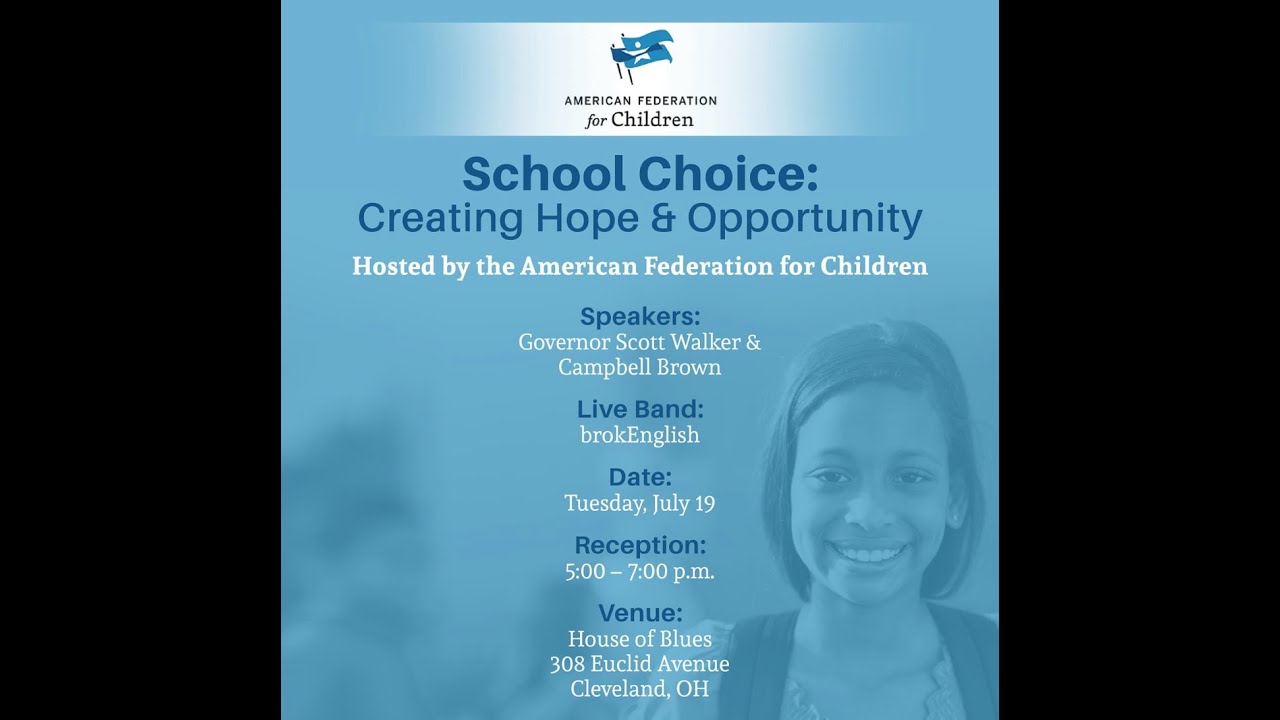
New video: Sitting down with Gov. Scott Walker outside the RNC
During a special forum organized today around the Republican National Convention, Wisconsin Gov. Scott Walker offered some unexpected advice on the best way to sell school choice measures – talk about improving traditional schools, too.
“People who truly believe in education, they recognize greatness whether it’s coming from a charter school, a choice school or a traditional public school, and they want as many good options as possible. They want schools to succeed no matter what, and that’s really got to be your core point,” Walker said at a Cleveland reception hosted by the American Federation for Children and moderated by 74 Editor-in-Chief Campbell Brown.
Back in Wisconsin, Walker has expanded Milwaukee’s voucher program, the first in the country, and pushed to create a statewide program for low-income families. But he also worked to overhaul teacher tenure, layoff, and compensation laws, moves he said helped improve traditional public schools.
Placing an emphasis on improving all schools helps counter opposition arguments that school choice programs only help a select group of students, Walker said.
“It’s really important, not just politically, but it’s the right thing to do, to make that argument that you’re not just looking out for one sliver of students, we’re looking out for all students,” he said.
Ultimately Walker says he feels both an economic and moral urgency to support school choice – as governor, he needs better schools training a more prepared and productive workforce, and he considers it a core obligation of society to ensure that every child has access to a great school, regardless of the circumstances of their life.
“You’ve got to make it about the children. You’ve got to make it about the students, and you can’t make it about pitting one against the other,” Walker said.
He pointed out the educational backgrounds of his own sons – Matt just graduated from Marquette, a private Jesuit college, while Alex will be a senior at the public University of Wisconsin. No one flinches at the idea that siblings in the same family could simultaneously be attending public and private colleges, he said, and it shouldn’t be a surprise when that happens in K-12 schools, either.
Walker, who spoke late Tuesday afternoon en route to the convention floor where he was set to cast Wisconsin’s votes for president, also complimented GOP vice presidential nominee Mike Pence, who Walker said had done an excellent job promoting school choice.
Walker, of course, also attempted his own run for the White House this year: “Was Donald Trump my first choice? No, I was my first choice,” he joked.
— Carolyn Phenicie (& )
6:00 p.m. Tuesday
Chris Christie Sure to Make Himself Heard on Convention’s Second Evening
In some ways, New Jersey Gov. Chris Christie’s public life has gone from bad to worse since he discontinued a non-starting presidential campaign that he’d hoped would win the allegiance of mainstream Republicans.
Virtually overnight, Christie re-styled himself as a staunch supporter of Donald Trump. The move that made him appear — fodder for late-night comics.
Trump appeared to seriously consider his new ally as a potential vice-president — Christie was thought to be on an unofficial three-person shortlist, with former House Speaker Newt Gingrich and fellow governor Mike Pence of Indiana, whom Trump finally selected.
It may be small reward (for now), but the always combative Christie still gets to takes center stage tonight at the Republican National Convention. Here’s what you should keep in mind about his record on education during a busy two terms in New Jersey.
He just floated a controversial school funding formula. Christie rocked New Jersey’s political establishment earlier this year when he announced a proposal to give every school district in the state the same amount of funding per student. Dubbed the the plan would slash urban school budgets while lowering property taxes in the suburbs. One found that cities with many poor black and Hispanic students could lose millions of dollars in funding — forcing them to make massive tax increases, layoffs, and program cuts.
He flip-flopped on the Common Core — sort of. Six years ago New Jersey became one of the first states to adopt the new standards, about which he he “agreed more with the president than not.” The state subsequently replaced its annual state test with PARCC, a series of digital exams aligned with the Common Core. Just a few weeks before his presidential campaign announcement, however, Christie said the standards — which most Republicans view y —&²Բú²õ±è;are “simply not working” and appointed a state task force them. The task force did release revised standards but one has to squint to find with the Common Core. The state has also continued to administer the PARCC exam.
He supports charter schools. Soon after Christie ended his own presidential bid and endorsed Trump,during the remainder of his term. During Christie’s administration, charter schools (particularly those run by well-known operators such as KIPP and Uncommon Schools) have in troubled urban school systems controlled by the state.
He overhauled teacher tenure. In 2012, Christie (backed by the state teachers union) that required teachers to serve four instead of three years before gaining tenure; During that, they had to earn positive ratings for two of the last three years. At any time during their career, teachers who were negatively rated for two years in a row be fired.
He’s willing to make enemies. Christie’s image as a pugnacious straight-talker has been burnished by his attacks on critics of his education agenda. He has repeatedly said that teachers unions deserve “a alleging that they don’t work on behalf of children. He has also been dismissive of by the mayor of Newark, whose school system Christie controls, telling him,, “I’m the decider and you have nothing to do with it.”
— Naomi Nix (& )
4:45 p.m. Tuesday
LIVE NOW: Â鶹¾«Ʒ’s Campbell Brown interviews Gov. Scott Walker at the Cleveland ‘Creating Hope and Opportunity’ reception
American Federation for Children’s Krista Carney writes in from Cleveland with a preview of their RNC reception:
We know our nation’s education system is failing its students. Every 26 seconds a child drops out of school, and those who do stay enrolled are unprepared for the future. Our nation’s National Assessment of Educational Progress, or NAEP, scores are flatlining and recent results show . Of the students who do graduate from high school and go on to college, their first year at a university or community college.
Every child in this country deserves access to a world-class education, and we need a solution to give children the opportunity to attend a great school and succeed well into the future.
School choice programs across the country have offered alternatives to children stuck in failing schools. The life-changing scholarships offered through these programs give students the chance to attend a school that suits their individual needs and interests immediately. During the 2015-16 school year, . Not only are parents taking advantage of these programs, but they’re also extremely popular with .
That’s why school choice is coming to Cleveland this week in full force. Tonight in the midst of the 2016 Republican National Convention, the American Federation for Children, the nation’s voice for educational choice, will host a reception to highlight school choice and celebrate the victories of the movement.
The highlight of the evening will be a discussion between Wisconsin Governor Scott Walker and AFC board member/74 Editor-in-Chief Campbell Brown about the impact of school choice. Both are leaders in the educational choice movement, with Brown’s commitment to informing the public about education issues and Governor Walker’s passionate support of school choice in Wisconsin, where alone.
Tune in to a , Creating Hope and Opportunity, beginning at 5:00pm EST. AFC is also hosting a reception at the Democratic National Convention to raise awareness to the importance of school choice in all forms, including public school choice and quality charter schools. The reception will feature Lisa Leslie and Jalen Rose.
— Krista Carney (& )
4:15 p.m. Tuesday
There are BIG differences between Democrats and Republicans on education today, so why isn’t anyone posing the question?
’ co-founder Andy Rotherham:
Education Week’s reporters tried last night to pretend education was somehow relevant to Monday’s goings on in Cleveland.
It wasn’t.
So now they’re reduced to asking whether . Makes you wonder if their per-diems are tied to supposed mentions of education from the podium?
In any event, the lack of education focus is unfortunate because there is an opportunity for a real debate. But, for different reasons, neither candidate seems interested in having it. Donald Trump doesn’t seem interested in the issue – or really any issues. And Secretary Clinton is in coalition-building not boat-rocking mode. Faced with the prospect of a President Trump, few Democrats are in the mood for a civil war about education or much else. Even the watering down of the Democratic platform on education – a stunt as crazy as the cribbed lines in Melania Trump’s speech – got little attention.
It’s a missed opportunity, though, because the candidates are distinct on the issue and their priorities quite divergent. The just released has the handprints of the evangelical wing of that party all over it. The has teachers union breadcrumbs sprinkled far and wide. A debate about a forward-looking vision for schools might be illuminating, and not just for the wonks who live and breathe such things, but for American parents who just want better schools for their kids. Governor Pence’s Indiana offers a rich set of policies to debate, if anyone were interested.
It brings to mind the 2012 race and the debate over economic policy. Mitt Romney, a thoroughbred capitalist, did his best to shave the rough edges off the view that the churn and chaos of capitalism is an inevitable byproduct of progress. President Obama, by contrast, bobbed and weaved to obscure just how much he believes government should be doing with regard to the economy and American life. It was a shame because the American people missed out on what could have been an important and real conversation about the role of government and the drivers of progress in American life. A question more complicated than an ill-considered remark about .
Now, in 2016, it looks as though education will get the same treatment. The occasional flare up, but no real sustained discussion about such a major part of American life. Sad!
— Andy Rotherham (& )
3:45 p.m. Tuesday
6 things every teacher and parent should know about the GOP education platform
The Republican platform has been revised and approved, and is perhaps the most thorough recent discussion of the party’s prevailing view on education policy. Here are six things every parent, teacher and education observer should know about where the GOP now stands on America’s classrooms:
Bipartisan distaste for testing: The 2016 Republican platform “rejects excessive testing and ‘teaching to the test’ and supports the need for strong assessments to serve as a tool so teachers can tailor teaching to meet student needs.” What’s especially notable here is that this is not all that different from the Democratic stance, which in part, “We are also deeply committed to ensuring that we strike a better balance on testing so that it informs, but does not drive, instruction. To that end, we encourage states to develop a multiple measures approach to assessment.” (Though note that this last excerpt is based on amendment that was approved by the platform committee; the document hasn’t been finalized yet by the Democratic delegates.)
Support for school choice (no matter the type): The GOP platform says “we support options for learning, including home-schooling, career and technical education, private or parochial schools, magnet schools, charter schools, online learning, and early-college high schools. We especially support the innovative financing mechanisms that make options available to all children: education savings accounts (ESAs), vouchers, and tuition tax credits.”
It’s notable that there is no distinction made between different types of schooling options, nor any substantive discussion about ensuring only quality options. For instance, recent evidence has found that virtual schools and vouchers lead to lower test scores for participants — but most of this evidence is grounded in testing, which, as previously stated, the party seems skeptical about.
No fans of Common Core: The platform says, “we likewise repeat our long-standing opposition to the imposition of national standards and assessments, encourage the parents and educators who are implementing alternatives to Common Core, and congratulate the states which have successfully repealed it.”
The United Nations may be brainwashing us: The platform calls for “a constitutional amendment to protect that right from interference by states, the federal government, or international bodies such as the United Nations.” Why this would be necessary is unclear, but it may be alluding to conspiracy theories related to the Common Core, including the idea that it is part of an (led by the U.N. natch) to brainwash students and takeover American education.
More money, same problems: Republicans are not fans of spending money to improve education: “The United States spends an average of more than $12,000 per pupil per year in public schools, for a total of more than $620 billion. That represents more than 4 percent of GDP devoted to K-12 education in 2011-2012. Of that amount, federal spending amounted to more than $57 billion. Clearly, if money were the solution, our schools would be problem-free.” This squares with the view of Trump surrogate (though not veep) Chris Christie, who recently proposed gutting school funding in New Jersey. However, most research evidence shows that spending more money on education does in fact improve student outcomes.
Plenty of overlap with 2012: The 2016 platform is substantially similar to 2012 . In fact, it’s nearly identical in some places.
2016 — “In sum, on the one hand enormous amounts of money are being spent for K-12 public education with overall results that do not justify that spending level. On the other hand, the common experience of families, teachers, and administrators forms the basis of what does work in education. In Congress and in the states, Republicans are bridging the gap between those two realities.”
2012 — “In sum, on the one hand enormous amounts of money are being spent for K-12 public education with overall results that do not justify that spending. On the other hand, the common experience of families, teachers, and administrators forms the basis of what does work in education. We believe the gap between those two realities can be successfully bridged, and Congressional Republicans are pointing a new way forward with major reform legislation.”
2016 — “Their D.C. Opportunity Scholarship Program should be expanded as a model for the rest of the country. We deplore the efforts of Congressional Democrats and the current President to eliminate this successful program for disadvantaged students in order to placate the leaders of the teachers’ unions.”
2012 — “The Republican-founded D.C. Opportunity Scholarship Program should be expanded as a model for the rest of the country. We deplore the efforts by Congressional Democrats and the current President to kill this successful program for disadvantaged students in order to placate the leaders of the teachers’ unions.”
— Matt Barnum (& )
3:15 p.m. Tuesday
Teachers: Melania Trump’s plagiarism wouldn’t fly in my classroom
The day after Melania Trump was accused of plagiarizing parts of her speech at the Republican National Convention, high school teachers and college professors told Â鶹¾«Ʒ they had one message for their students: don’t try this at home.
“This would be a great teaching opportunity for students in class,” said Christine Treece, a former high school English teacher and current curriculum specialist.
Photo: Getty Images
Melania Trump, the wife of presumptive Republican presidential nominee Donald Trump, used her speech Monday to pay tribute to her parents, who taught her about the importance of hard work, keeping your word and treating people with respect — values she says she hopes to pass on to her children and kids around the country.
But soon after the applause was over, Trump was that part of the speech from first lady Michelle Obama’s address at the 2008 Democratic National Convention. Campaign chairman Paul Manafort has since that it was plagiarism.
As a high school teacher in Washington, Treece said she has witnessed students turn in essays with sections that were copied from materials they found on the internet. Sometimes, she says, kids try to add slight modifications to preexisting ideas or sections of text — the same sort of plagiarism that critics are now saying Melania Trump is guilty of.
“I think generally they think: ‘Oh well, ideas are not anyone’s property.’ They don’t understand the idea of intellectual property,” Treece said. “People work really hard for these ideas. When you steal them you are completely pushing aside their hard work.”
When she caught a student plagiarizing, Treece would have a talk with them about why it was a form of stealing even if they changed a few words and then would tell them to write the paper again. If they tried to plagiarize a second time, she recalls, they failed the assignment and were sent to the principal’s office for further discipline.
“The second time you know what you are doing now. You are actually cheating,” she said. “Ninety-nine percent of the time it wouldn’t happen again.”
If only Melania Trump had the chance for a do-over.
Shortly after the plagiarism charges broke Monday night, other educators took to Twitter to say they too wouldn’t have accepted this kind of plagiarism in their classes.
If I were grading that speech in my class, Um, F for Nice start to the convention Donald.
— Millicent B Accardi (@TopangaHippie)
Just a PSA to my students: you’ll fail the class for 7% plagiarism.
— Erin Celello (@erincelello)
If I were grading who wrote Melania’s speech in my journalism class, the grade would go from a charitable B to a F due to plagiarism
— Alan Pergament (@StillTalkinTV)
Zac Gershberg, an assistant professor of journalism and media studies at Idaho State University said his department uses a plagiarism detection service, Turnitin.com, to catch students who are stealing others’ work. If they are found to have plagiarized, they automatically fail the class, he said.
“It’s not just an zero on the assignment it’s an immediate ‘F’ for the semester,” he said.
— Naomi Nix (& )
1:45 p.m. Tuesday
In AFT speech, Clinton decries Trump-Pence as ‘hostile’ to public education; eyes pre-k as wedge issue
Speaking to teachers and union leaders in Minneapolis on Monday, presumptive Democratic presidential nominee Hillary Clinton blasted Indiana Gov. Mike Pence for rejecting federal preschool funds, saying both the Republican vice-presidential candidate and the presumptive presidential nominee Donald Trump shouldn’t be “anywhere near our children’s education.”
At the American Federation of Teachers biennial event in Minneapolis, Clinton said Pence “turned away millions of federal dollars that could’ve expanded access to preschool for low-income children,” .
Unlike Trump, Pence has an extensive record on education policy. In 2014, Pence signed a law making Indiana the first state to pull away from the Common Core State Standards. He’s also worked to expand the state’s voucher program and charter schools.
But when it comes to preschool, his stance has been all over the map. In 2014, he made a rare appearance to convince Republican Indiana legislators to back a statewide pilot pre-school program. He then rejected a federal education grant to expand preschool programs, only to later apply for the federal dollars.
Clinton has long universal preschool. During a campaign stop in May, Clinton also announced a major proposal to double down on a home visitation program for low-income families. Through the program, which was implemented through a Patient Protection and Affordable Care Act provision, interested pregnant women and new parents receive regular, planned home visits from nurses and social workers to improve maternal and child health, prevent child abuse, encourage positive parenting practices, and better prepare at-risk children for school.
Calling Pence “one of the most hostile politicians in America when it comes to public education,” Clinton used the AFT speech to respond to a common talking point among prominent GOP leaders — from Trump to Texas Sen. Ted Cruz —&²Բú²õ±è;that the U.S. Department of Education should be shut down.
“That agency might not always get it right, but it provides support for vital programs from pre-K to Pell Grants and crucial resources to help low income students, students with disabilities, and English-language learners,” Clinton said. “So Donald Trump would leave our most vulnerable students to fend for themselves.”
— Mark Keierleber (& )
12:30 p.m. Tuesday
Is the GOP obsession with local control of public education out of control?
New RNC dispatch from Peter Cunningham, executive director of :
If Republican conservatives stand for one thing above all else when it comes to public education, it is local control. Just as some conservatives see tax cuts as the only answer to an ailing economy, some also see local control as the antidote to everything wrong with schools. Yet, the evidence for local control as a strategy to improve schools is weak, at best.
Consider standards. By law, the federal government is prohibited from setting learning standards and, historically, states have set them all over the place. To their credit, governors and state education leaders on both sides of the aisle came together and created the Common Core State Standards, believing that common standards across state lines make sense.
But, after the federal government offered incentives to adopt the standards, local control zealots fought back and prompted some states to abandon the standards they helped create, including Indiana, the home state of the Republican Vice Presidential candidate Mike Pence. Ambitious, common standards may be good for kids and for American competitiveness, but they now violate conservative principles. The quality of the standards is, of course, irrelevant.
Look at integration. Sixty-two years after the Supreme Court ruled segregated schools illegal, local control has undermined most efforts to promote integration in the world’s most racially diverse country. Today, our schools are more segregated than ever.
When it comes to innovation in education, conservatives often point to charter schools, which are authorized at the state and local level. But, the biggest threat to charter schools is not centralized oversight, but rather its absence. While the best charters have closed achievement gaps, on average only a third out-perform traditional neighborhood schools. The real problem facing charters is quality control and local control does little to address it.
The accountability argument against local control also applies to traditional public schools. Until the passage of No Child Left Behind in 2001, there was no real accountability in public education. Low-performing schools languished for decades. Graduation rates in thousands of high schools serving low-income students hovered around 50 percent.
For the last 15 years, the federal government has forced states and districts to provide objective proof that kids are learning and to take action when they aren’t. Alas, under the new federal education law passed in 2015, local control zealots on the right conspired with the left to weaken federal oversight of schools.
On issue after issue – teacher training and evaluation, curriculum, funding equity – local control trumps fairness and quality, but don’t expect to hear any complaints at the Republican convention in Cleveland.
— Peter Cunningham(& )
11:30 a.m. Tuesday
Melania promises the ‘best’ education system — but Trump has a lot of work to do to live up to his wife’s promises
’ Max Marchitello writes about Melania Trump’s speech Monday night:
Photo: Getty Images
Melania Trump, the keynote and highlight of Monday night’s Republican National Convention, delivered a positive and optimistic speech that capped an otherwise contentious evening. Setting all plagiarism controversy aside, Trump was thankful, patriotic, and fiercely supportive of her husband.
Among the many things she promised that only Donald Trump can deliver is the “best possible” education system.
Unless he has a magic wand, Trump has a lot of work to do to make that a reality.
First, he will have to reverse course on a number of his policies and positions. For example, he will need to embrace higher academic standards for all students and abandon the idea of eliminating the Department of Education. Second, he will have to find a way to compromise with diverse and often contradicting stakeholders. Third, he will have to find the funds to pay for it.
But, his platform doesn’t leave much room for optimism. Nevertheless, here are three key things that President Trump would need to do to improve public education for all students.
Hold states accountable for improving the performance of struggling students. For years states have gotten away with providing some students with a world class education while giving others . It’s not fair. And, it’s not a smart way to plan for America’s future. Trump will need to make sure that states take their obligations to all students, but particularly students of color and low-income students. In all likelihood this will mean confrontations between the federal government and states. Hopefully Trump won’t shy away from those fights.
Make sure that disadvantaged students get more not less funding. It is an unfortunate fact that America is among only a handful of countries that spends less money on the education of its poorest students than their more affluent peers. It’s . Yet, the problem has persisted for decades. If Trump is serious about providing all students with the best possible education, he will need to make sure that disadvantaged students get their fair share of funding. This will mean giving them more money.
Improve the teacher pipeline. Good teaching matters. But, for disadvantaged students it is often in short supply. Since the pay is so low and the hours so long, schools struggle to retain their talent. To make matters worse, schools of education are preparing teachers for classrooms that have long since faded into history. We need to rethink teacher compensation and revamp teacher prep to meet the demands of today’s schools and labor market.
Given Trump’s current positions on education policy, it is foolish to hope that he will deliver on any of these issues. However, if Melania Trump is to be believed, her husband can and will make the necessary evolutions to help this country he professes to love.
— Max Marchitello(& )
8:15 a.m. Tuesday
A few thoughts on Monday night at the RNC: Remember students, we’ve heard all this before
’ Andy Smarick weighs in on Monday night’s program at the RNC:
I watched 213 consecutive minutes of the GOP convention last night, and I’m not sure that the words “education” or “schools” were uttered a single time. Melania Trump’s speech referenced her interest in working with kids as First Lady, and Retired Lt. Gen. Michael Flynn seemed to take a swipe at the Obama Administration’s . But that’s as close as we got to K-12 education.
I could try to spin this into a “” post and tell you that the lack of evidence of one thing is the evidence of something else. We could call it, “No One Talked About Education and Here are 17 Reasons Why That’s Terrible,” and get a bunch of clicks. But the honest-to-goodness truth is that last night’s theme was safety and security. We had no right to expect much explicit edu-talk.
That said, the way Monday night’s speakers discussed, stoked, and sought to alleviate America’s fears was edifying. What struck me most about RNC night one’s content was how it conjured up storylines from across American history.
Despite how discouraged I’ve been about this year’s politics, I’ve tried to remain philosophical. I’ve told myself that candidates and campaigns reflect their eras. You can’t understand Andrew Jackson and 1828 without understanding John Quincy Adams and 1824; Lincoln without understanding Dred Scott; FDR without understanding the Depression, and so on.
So, last night when I heard Willie “Duck Dynasty” Robertson talk about how elites don’t know the rest of America; or Marcus Luttrell, Pat Smith, and Senator Tom Cotton invoke codes of military honor; or Antonio Sabato, Jr. say, “I know what socialism looks like, and I don’t want that for my children;”…all I could think was, “We’ve heard all of this before.”
Now, you might see in all of this nativism, populism, and Know-Nothingism. Or maybe it sounds to you like egalitarianism, patriotism, and boot-strapping-ism.
You might see shades of James Blaine, Pat Buchanan, William Jennings Bryan, and/or Joseph McCarthy. Maybe you think of Frederick Douglass or Cesar Chavez. You might think of the chaos of 1968 and/or the consequences of the crime bill of 1994. Maybe you smile and think of Horatio Alger, manifest destiny, and the shining city on the hill. Or maybe you scowl and think of Shays Rebellion, Gilded-Age resentment, and the crash of 1929. Maybe you think of the righteousness of the Cold War, the elevation of Generals like Taylor and Eisenhower to the presidency, or Bunker Hill; or maybe you think of the anti-war America First Committee, the sinking of the Maine, and Iraqi WMD.
My point here isn’t to advocate for any of these interpretations. My point is that I’d just like our students to know all of these historical references (and many, many more).
Although the issues of 2016 may seem novel, they’re just variations on themes that seem to be part of the human condition — struggles over liberty, equality, opportunity, security, unity, diversity, morality, and more.
And the more we and our students can learn, and truly understand how these fights have been litigated and adjudicated in the past, the better we can put today in perspective and hopefully — prayerfully — make tomorrow a bit better.
— Andy Smarick (& )
7:15 a.m. Tuesday
A student speaks out: What will the next president do for inner city families?
The is bringing together local elected officials and education leaders for a Town Hall discussion on what it means to be a college student in 2016. will take place at the Philadelphia History Museum Tuesday, at 6pm. This is an opportunity for Pennsylvania students to tell elected officials and the presidential campaigns what it means to be a student today, and discuss the challenges and barriers to attaining a degree, including debt, child care, work and other commitments. Register for the event and learn more .
To kick off the conversation, here’s an essay from Michael Baldwin, a student majoring in business administration at Pierce College who is now working as a University Relations Recruitment Intern at Comcast NBC Universal. He is a Year Up graduate and has ambitions to run for office one day.
An Inner City Agenda for the Next President: No one asked me if I wanted to grow up in the inner city. No one warned me about the failing schools and the lack of opportunities to pull myself out of poverty. And no adult could ever explain to me why I hated myself, and why I always dreamed of a different life. Looking back, I now see how this mindset is shared among different generations – how easy it is for young men like me to hate the world around them. But young people in the inner city deserve better, which is why the next president should create an inner city agenda that provides all youth more opportunity.
While many men and women come out of the inner city and have successful and meaningful lives, there are not enough. According to the , just over 60 percent of African Americans are participating in the labor market while 14 percent of African American men and women between the ages of 18-34 are out of work. One explanation is that there are few jobs for inner city youth – there is no ladder that leads to a better life.
The lack of opportunities for young people in the inner city seemed intentional to me and I felt completely hopeless, until I participated in the Year Up program – an inner city program that tries to close the Opportunity Divide. Because of this opportunity, I was hired at Comcast NBC Universal with the University Relations team shortly after completing the program. I have only been at the company for a year, but I already recognize how Year Up set me up for success by giving me the chance to gain and sharpen professional skills necessary for success in any endeavor.
I reflected on my opportunity recently at an event held at Kensington High School — one of the higher poverty-induced neighborhoods in Philadelphia, riddled with drugs, crime and deteriorating family life. A company hosted a workshop that provides professional development for local high school students. While meeting with the students, I took an informal poll by asking what they wanted to do after high school. I heard many of the same answers: basketball player, rap artist, and hair stylist.
A few weeks after this event, I had the opportunity to speak at the high school where I graduated. Located in the suburbs of Philadelphia, the student demographics and opportunities available are quite different than what I was exposed to growing up in the inner city. I asked the same question of many students: What do you want to do after high school? This time the answers were completely different. Students responded with veterinarian, lawyer, engineer, and political figure. This immediately struck me as I understood their responses depicted the opportunities they were exposed to in their communities – opportunities that Kensington High students were not afforded.
How can our political leaders allow this to happen – to allow kids in the same city to dream in different colors? The next president has an opportunity to create an inner city agenda that will help all young people, not just those that live in the suburbs. Specifically, this agenda could increase the amount of mentors available for today’s students and provide more career guidance support. To accomplish this, the next president can pass a legislation that would allow funds to target communities with extremely high dropout rates. These funds could then support programs that enable students to earn their GED, and assist higher job training and learning conduits such as Year Up, City Year and Power Corps.
If we do nothing, our future in the inner city is stark. Without jobs, crime rates increase and inner city youth are academically and professionally left behind. The lack of attention our political leaders give youth in the inner city has only perpetuated senseless crime and degradation. Something must change. So at this evening’s Town Hall for Today’s Students hosted by America Forward, with representatives from the presidential campaigns, and local elected official, I will have only one question to ask: What kind of inner city agenda will the next president offer?
— Michael Baldwin (& )
6:50 p.m. Monday
Who doesn’t agree with Trump on immigration? Rudy Giuliani…or at least Mayor Giuliani
One of tonight’s headliners at the RNC is Rudy Giuliani, former presidential contender and star conservative commentator who, while mayor of New York City, made it clear that he was accepting of both immigrants and undocumented children on a scale that would surely horrify candidate Donald J. Trump.
Back in 2007, during Giuliani’s short-lived presidential campaign, he once told the New York Times: “[Abraham Lincoln] made a beautiful speech in which he said the best American is not the American who has been here the longest or the one who just arrived…it is the one who understands the principles of America the best because we are a country held together by ideas.”
Given Rudy’s citation of Honest Abe, let’s rewind for a moment to 1858. Abraham Lincoln, his white nationalist rival Steven Douglas, called to mind the heroes of the revolutionary era in a Chicago celebration of Independence Day: “We find a race of men living in that day whom we claim as our fathers and grandfathers; they were iron men… by what they then did it has followed that the degree of prosperity that we now enjoy has come to us.”
But Lincoln also recognized that “perhaps half our people… are not descendants at all of these men, they are men who have come from Europe — German, Irish, French and Scandinavian…If they look back through this history to trace their connection with those days by blood, they find they have none.” These newer arrivals, he said, “cannot carry themselves back into that glorious epoch and make themselves feel that they are part of us,” but they can revisit the words of the founders in the Declaration of Independence and acknowledge the self-evident truth of human equality as “father of all moral principle”
The Declaration, Lincoln argued, allows every new arrivals to become as “blood of the blood, and flesh of the flesh” of those who founded the country.
The Great Emancipator’s views on immigration — including his repudiation of the anti-Catholic and anti-immigrant Know Nothing movement — may not be well-known today, and seem unlikely to get an airing among this week’s ceremonies nominating a man who aspires to Lincoln’s position by acceding to fear by promising to bar and eject immigrants. But Giuliani knows these ideas well — and proudly celebrated them throughout much of his career
Giuliani continued the immigration-friendly policies of his Democratic predecessors after becoming mayor in 1994, championing access to health care, schools, and police for illegal immigrants and continuing a moratorium that prohibited New York City employees from reporting illegals to federal authorities. He that would make English the country’s official language.
“Some of the hardest-working and most productive people in this city are undocumented aliens,” he told the Times in 1994. “If you come here and you work hard and you happen to be in an undocumented status, you’re one of the people who we want in this city. You’re somebody that we want to protect, and we want you to get out from under what is often a life of being like a fugitive.”
Following passage of federal immigration reform in 1996 that would have overturned the city’s ban on identifying illegals, Giuliani sued the federal government, calling the new laws “inhumane and indecent.” The U.S. Supreme Court ruled against the city in 2000.
“The anti-immigration issue that’s now sweeping the country in my view is no different than the movements that swept the country in the past,” in 1996. “You look back at the Chinese Exclusionary Act, or the Know-Nothing movement — these were movements that encouraged Americans to fear foreigners, to fear something that is different, and to stop immigration.”
Strong sentiments, from a principled leader. The same leader who will speak tonight in support of a man who continues to define what his temporary ban on Muslims, and his wall along the southern border, will look like.
(&)
6:30 p.m. Monday
Rules vote gets unruly at RNC
Protests erupted on the floor of the GOP convention late this afternoon as anti-Trump forces tried to upend the rules process and interrupt Donald Trump’s march to the nomination. The protesters tried unsuccessfully for a roll call on the rules package.
Trump foes started after the party leaders approved by a voice vote rules at the start of the convention that barred them from registering their opposition, according to Reuters.
delegate says ‘brown shirt fascists’ shut down movement during rules fight at
— NY1 News (@NY1)
I am very disappointed that states have walked off convention floor, opposing . This isn’t way to unite .
— Rudolph Giuliani (@rudygiulianiGOP)
Colorado delegates at tell me Trump team is trying to seat the state’s alternates to boot Cruz delegates who walked out
— John Frank (@ByJohnFrank)
Live coverage of
— Sam Adams (@SamuelAAdams)
4:55 p.m. Monday
Clinton calls for end to school-to-prison pipeline, swipes at Trump’s NAACP no-show
Democratic presumptive presidential nominee Hillary Clinton denounced violence and called for reconciliation today in the wake of a string of deadly encounters between police officers and black residents including Sunday’s of three officers in Baton Rouge, Louisiana.
Democratic presidential candidate Hillary Clinton addresses the crowd at the 107th Annual NAACP Convention at the Duke Energy Center July 18, 2016, in Cincinnati, Ohio.
Photo: Getty Images
“This madness has to stop. Watching the news from Baton Rouge yesterday, my heart broke. Not just for those officers and their grieving families but for all of us,” Clinton said while addressing the NAACP’s annual convention in Cincinnati, Ohio.
“We have difficult, painful, essential work ahead of us to repair the bonds between our police and our communities and between and among each other. We need each other to do this work.”
While calling the murder of police officers a “terrible crime,” the former secretary of state also said that there is a “hard truth” that African-Americans are to be killed by police officers. Clinton touted the need to invest in conflict de-escalation training for police officers, decrease mass incarceration and “dismantle the school-to-prison pipeline.”
“That starts in school and diverts too many African-American kids out of school and into the criminal justice system instead of giving them the education they deserve to have,” she said.
Some 250 miles away in Cleveland, was getting underway. The presumptive GOP presidential nominee Donald Trump was also invited to speak before the NAACP but —a decision Clinton said left the organization to look “at what he has said and done in the past.”
“Donald Trump led the movement to delegitimize our first black president, trumpeting the so-called birther movement. Donald Trump plays coy with white supremacists. Donald Trump insults Mexican immigrants, even an American judge born of Mexican heritage. Donald Trump demeans women. Donald Trump wants to ban an entire religion from entering our country…This man is the nominee of the party of Lincoln and we are watching it become the party of Trump. And that is not just a huge loss to our democracy, it is a threat to our democracy.”
Clinton also announced her to get 3 million more people registered to vote in the 2016 presidential election.
—&²Բú²õ±è;Naomi Nix (& )
3:30 p.m. Monday
Exclusive videos: Before they stumped for Trump at the RNC, GOP speakers revealed their education stances to Â鶹¾«Ʒ
The state of K-12 education in America may take a back —&²Բú²õ±è;way, way back —&²Բú²õ±è;seat at the GOP convention in Cleveland this week but that issue was front-and-center at Â鶹¾«Ʒ’s Education Summit in New Hampshire last summer.
Many of the same faces who will be touting party unity between now and Thursday — Scott Walker, Chris Christie, Marco Rubio and Ben Carson — engaged in lengthy Q&A sessions with Â鶹¾«Ʒ’s Editor-in-Chief Campbell Brown at the summit and in subsequent interviews in Milwaukee, Wisconsin.
The topics ranged from the preparedness of American students to compete in a global economy, school choice, the Common Core, the role of the U.S. Education Department and dealing with the teachers unions. Read Â鶹¾«Ʒ’s Mark Keierleber’s full roundup here.
—&²Բú²õ±è;Kathy Moore (& )
12:10 p.m. Monday
What a Biblical debate revealed about Republican delegates and their thoughts on America’s schools
The Republican National Convention opens at 1 p.m. today and one of the first pieces of business before the prime time speakers take the stage will be adopting the party platform. The nuts-and-bolts of the platform were debated last week, which prompted one of the longest conversations among the GOP faithful on what is and what should be going on in American classrooms.
The subject was the Bible and whether it should taught as literature, history or the word of God. Several of the delegates who took part in the discussion identified themselves as current or retired educators and one recalled his own relatively recent experience learning about the Bible in high school.
Some 20 minutes was spent dissecting this language:
A good understanding of the Bible being indispensable for the development of an educated citizenry, we encourage State legislatures to offer the Bible as literature curriculum in America’s high schools.
Brandon Smart, the American Samoa delegate and a public school teacher, objected out of concern that the Bible would then not be taught as a “100 percent the word of God,” as he believes it to be. He said American high schools in many states already had the ability to offer the Bible as a literary elective.
“Who is going to be teaching the Bible and how are they going to be teaching it and what are they going to be teaching about the Bible,” he asked. “Are we going to be teaching it as a historical document that is no longer relevant or are we going to make sure it’s the actual word of God”
Another delegate worried if they took it out, it would be portrayed that the Republican platform “threw out the Bible.” To which another delegate chimed in, “Amen.”
The delegate from Michigan later said she wasn’t concerned about leaving the Bible’s instruction in the hands of teachers.
“We have pornography being offered as literature curriculum in Michigan,” she said, “I can’t imagine if teachers are able to present that as literature that they can’t teach the Bible.”
Many of the delegates spoke of the Bible’s importance to the Founding Fathers and that it should be taught in that vein, as part of the history and morality of American society.
“I think one of the things we have been missing is the absolute decline in the education program in the United States of America,” the Minnesota delegate said. “The values in the Bible are the values that drove the founding of this nation.”
Not everyone thought the Bible belonged in the classroom. Ohio delegate Dave Johnson said he was Christian but did not want state legislatures involved in teaching the Bible and Nevada delegate Juanita Cox said including the language would “stomp” on the big tent the GOP was trying to build.
A GOP delegate from Maine recalls learning the Bible in his Shaker Heights high school.
Photo: C-SPAN
One of the last speakers was the delegate from Maine who told the committee he had grown up not far from there in the Cleveland suburb of Shaker Heights and was young enough that his 10th-grade English class was “not too distant in my memory.”
“We were taught the Bible as literature… and despite it being a very liberal school district…it was taught very well. It was very valuable. Objectively speaking, separating it from the ethical and moral teachings of the Bible, it was very helpful as a student as we are reading Shakespeare and so many other things that permeate our literary culture, there are so many references that go back to the Bible. It is valuable just as an academic pursuit for students to have this opportunity.”
— Mareesa Nicosia (& )
7:40 a.m. Monday
5 things the Pence pick could mean for the future of federal education policy
The Veep-stakes are over! The pick is in. Mike Pence, the sitting Governor of Indiana, will run as Trump’s Vice President.
Donald Trump and Mike Pence talk to ’60 Minutes’
Photo: CBS News
Although he has only been Governor for a few years, Pence also served in the U.S. House of Representatives. Putting those records together, Bellwether Education Partners’ Max Marchitello takes stock of what the Pence pick could possibly mean for the future of public education.
1. Tough sledding for civil rights: Pence’s stance on equal rights is pretty clear. Everyone remembers he signed permitting individuals and businesses to discriminate against LGBT people. So, many federal student protections could be in jeopardy, including President Obama’s executive action on bathroom use for transgender students. In a similar vein, Pence strongly supports states’ rights and local control. He likely would advocate for reducing (perhaps even further) the federal footprint in education. This is bad news for low-income students and students of color who frequently receive low-quality educations and depend on federal support.
2. Funding redistribution (but not to support low-income students): If his most recent budget in Indiana is any indication, Pence certainly feels that something needs to be done to improve school funding in this country. Unfortunately, however, he seems to think wealthier districts need an of the school funding pie.
3. Charter school expansion: In addition to increasing funding for charters broadly, Pence also the so-called bill. The idea is to help provide teachers with the flexibility they need to innovate in their classrooms. Some teachers and union representatives that they already have that freedom. Instead, they believe that the bill is designed to limit union power and invite private entities to run public schools.
4. Vouchers, vouchers, vouchers: For years Pence has been a vocal proponent of school vouchers and expanding the use of public funds to pay for private education. Last year he helped to shepherd a bill to raise available for elementary school students. A Trump/Pence White House may provide the strongest support for expanding voucher programs in decades.
5. Pre-school a priority (kind of): It’s a far cry from universal pre-K, but Pence was able to Indiana’s pre-school program. He also to expanding the program further with or without federal support. It is important to note, however, that Pence previously millions of dollars of federal support, and only seemed interested in them now that he is up for reelection.
In education policy, Pence sticks to the party-line. For that reason, his selection should make many conservatives happy. But students and teachers should be on high alert. In a Trump/Pence White House, it would take a watchful eye and strong advocacy to preserve critical federal protections for vulnerable students, ensure low-income students get their fair share of funding, and prioritize students’ needs over states’ rights.
— Max Marchitello (& )
6:30 a.m. Monday
Prime-time in Cleveland: Who’s on tap to speak tonight at the RNC
The 2016 Republican National Convention is officially here.
The festivities kick off this afternoon, with an official business session for the party, during which delegates will vote on ratifying both the convention rules and the official GOP platform.
The theme for tonight’s prime-time program: “Make America Safe Again,” and the stage program will reportedly feature an eclectic mix of speakers. While the final schedule is still shaping up, here are some of the headliners being touted by multiple outlets:
Senator Tom Cotton
Former NYC mayor Rudy Giuliani
Sen. Joni Ernst
Melania Trump
TV actor and producer Scott Baio, known for his characters in such hit television shows as “Happy Days,” “Joanie Loves Chachi,” and “Charles In Charge.”
Rick Perry, former governor of Texas.
Willie Robertson, CEO of Duck Commander and star of “Duck Dynasty.”
Gov. Kasich touts Cleveland Schools at NAACP convention; no plans to speak at RNC
Ohio Gov. John Kasich, in a speech to the NAACP Sunday night, touted school reforms in Cleveland as one of his top achievements aligning with the civil rights organization’s priorities.
“We all worry about our schools. And in the city of Cleveland, with an African-American mayor, organized labor and the business community, we have unveiled, in my judgement, the most significant school reform in the north in America to give people a chance and an opportunity,” he said.
, passed in 2012, overhauled Cleveland’s labor and charter laws. For more on Kasich’s education record, including his focus on turning around the cities of Cleveland and Youngstown, see Matt Barnum’s recent analysis of the good, bad and ugly of Ohio education.
Kasich, who has not endorsed Donald Trump and is not slated to speak at the Republican convention being held just four hours northeast of the NAACP meeting, also discussed the power and potential of mentoring. One high school in Cincinnati had a graduation rate of 97 percent, well above the city average, thanks to a mentoring program, he said.
Many rise to give standing ovation to Kasich as he leaves stage .
— paula christian (@PaulaChristian_)
Trump declined to address the NAACP convention. Education Secretary John King and Hillary Clinton are slated to speak tomorrow.
Beyond education, Kasich also used Sunday’s speech to focus on prison sentencing reform, Medicaid expansion, and changes to the use of force by police.
“With the proper leadership… it’s really remarkable what can be achieved,” he said. “We’re going to make sure we do everything we can to give every single human being the sense that they matter, that they count, that they can be hopeful and that justice will be done.”
— Carolyn Phenicie (& )
3:30 p.m. Sunday
Report: Trump will name prospective cabinet, including Secretary of Education, at Convention
Breitbart that Donald Trump is ready to make the unprecedented move of using the stage of the Republican National Convention to announce prospective members of his cabinet, including the Secretary of Education.
Citing the comments of close Trump confidant Roger Stone in a radio interview set to air Sunday evening, Brietbart’s Aaron Klein as saying: “I think that Trump is going to name a prospective cabinet and there is of course a way to do this in a way that is perfectly legal…I think you could take that to the bank.”
While it is illegal to promise someone a federal job, Stone said Trump’s team can easily work around the legal issue to add to the RNC spectacle: “Technically of course to promise someone a federal job is a crime so Trump could theoretically say, ‘For CIA Director I would appoint General Mike Flynn or someone like him.’ ‘For Secretary of State, I would appoint, who knows, you know, Aaron Klein or someone like him.’”
Stone also told Klein that Trump was inclined to name cabinet members that fall well outside the GOP establishment, and that he wants to use the convention as a way of telegraphing to potential voters that he would not be the prototypical Republican president.
Read more about Trump’s expected announcement .
— Steve Snyder (& )
10:15 a.m. Sunday
GOP platform turns against public early education
While most of the political world was focused on Donald Trump’s short list for running mate, and the upcoming vote in the Republican rules committee on the so-called “conscience clause” (which we watched fizzle at Thursday night’s meeting), new education priorities were being spelled out in the official GOP platform.
One big platform shift puts the party at odds with a common talking point among Democrats, about expanding access to universal pre-k.
As , last week’s platform amendments included language that would reject national prekindergarten outright, decrying pre-k for inserting “the state in the family relationship in the very early stages of a child’s life.”
With both college costs and pre-k access leading the national education conversation, the new GOP language on early education could easily become a wedge issue in this year’s election — as could Mike Pence’s controversial record on Common Core standards, school funding, and his rejection of federal funds to expand Indiana’s pre-k programs. (Read our complete breakdown of Pence’s education priorities while governor)
The new GOP platform amendments will be put to a vote at the convention.
— Steve Snyder (& )
9 a.m. Sunday
Will Pence’s recent push on CTE shape education conversation at RNC?
Among Gov. Mike Pence’s most recent education initiatives in Indiana has been expanding career and technical education across the state.
He appeared in front of Congress a year ago to talk about the Hoosier State’s recent CTE initiatives, and cited a career education focus as one way to boost graduation rates and lift students’ optimism about their future employment prospects.
Pence talks career education on Capitol Hill — reports:
— WISH-TV (@WISH_TV)
Given how little Donald Trump has actually said about education — in comparing Trump and Pence on key issues, even the New York Times to say much more than “Mr. Trump has said little about his education plans other than that he is against Common Core and that ‘education has to be at a local level'” — Pence’s priorites are sure to shape the education focus of both the convention and the ticket. If that does indeed turn out to be true, pushing CTE will likely be front and center for the Republicans.
9:45 a.m. Saturday
Jeb Bush publishes blistering anti-Trump essay that looks to the future of the GOP
Jeb Bush took to the Washington Post with a pre-RNC essay that tore down Donald Trump, openly discussed the prospect of voting for a write-in candidate and advanced a vision for how the GOP could “rebuild our party and the foundation for a true conservative renewal in our country.”
It’s worth reading the essay , but three noteworthy takeaways:
Bush on how he’ll vote for president: “While he has no doubt tapped into the anxiety so prevalent in the United States today, I do not believe Donald Trump reflects the principles or inclusive legacy of the Republican Party. And I sincerely hope he doesn’t represent its future… I haven’t decided how I’ll vote in November — whether I’ll support the Libertarian ticket or write in a candidate — but I do know there are a lot of things Republicans can do in the coming months to lay the groundwork for rebuilding our party and the foundation for a true conservative renewal in our country.”
On how he’ll vote for Congress and state leaders: “There is nothing more important than retaining control of Congress and state governorships and legislatures. We need House Speaker Paul D. Ryan (R-Wis.) and others to retain this important check on the power of the White House and federal bureaucracy, no matter who wins the presidency. Second, let’s move beyond the daily fray of who is disparaging whom on Twitter, and rally around a policy agenda that will lead to greater economic growth, revitalized leadership on the global stage and a strengthened democracy.”
On the toxic partisanship that has consumed Washington, D.C.: “Eight years of the divisive tactics of President Obama and his allies have undermined Americans’ faith in politics and government to accomplish anything constructive. The president has wielded his power — while often exceeding his authority — to punish his opponents, legislate from the White House and turn agency rulemaking into a weapon for liberal dogma. In turn, a few in the Republican Party responded by trying to out-polarize the president, making us seem anti-immigrant, anti-women, anti-science, anti-gay, anti-worker and anti-common-sense.”
Read the full essay at .
— Steve Snyder (& )
8:30 a.m. Saturday
Indiana’s Superintendent warns America about Mike Pence’s ‘abysmal’ education record
The morning after national media outlets first started reporting that Donald Trump had chosen Indiana Gov. Mike Pence to be his running mate, the campaign of , the state’s superintendent of public instruction and a vocal Pence critic, issued a press release tearing down the governor’s record on schools.
Here’s Friday’s full text, from campaign manager Annie Mansfield:
“Indiana’s teachers, parents and students can rest a little easier knowing that Mike Pence will now be absent from Indiana and soon be unable to force his political agenda on our classrooms.
“In his time as Governor, Mike Pence has consistently put politics before Hoosier students. He created a duplicate education agency through executive order. He turned down tens of millions of dollars in desperately needed Pre-K funding because of his extreme political ideology. And he removed the elected Superintendent of Public Instruction as Chair of the State Board of Education, disenfranchising 1.3 million Hoosier voters.
“While getting Mike Pence out of the Governor’s race would be a welcome development, Indiana still needs a governor that will work with our elected Superintendent on an education agenda. Hoosiers need John Gregg as our governor because he will support Superintendent Ritz, who has proven time and again that she’ll put our kids first.”
Â鶹¾«Ʒ’s Carolyn Phenicie published a deep dive into Pence’s record on schools and education policy. See her full analysis here.
7:30 a.m. Saturday
Tim Tebow will not be speaking in Cleveland
When the initial speaker list for the Republican National Convention earlier in the week, one of the more notable celebrities touted in releases and headlines was NFL quarterback Tim Tebow, who was slated to appear Thursday, the night of Trump’s acceptance speech.
But Tebow took to social media Friday calling it all “a rumor,” and was emphatic that he had no plans to speak in Cleveland next week:
The fact that Tim Tebow was supposedly speaking at the RNC was news…to Tim Tebow
— NowThis (@nowthisnews)
Monday’s speakers are set to include Senator Tom Cotton and former New York City Mayor Rudy Giuliani, in an opening night conversation that will focus around Benghazi.
5:15 p.m. Friday
Pence’s deep track record on school standards, choice and equality
Â鶹¾«Ʒ’s Carolyn Phenicie just published a thorough profile of Indiana Gov. Mike Pence, including his position on five key education issues — including standards, charter schools, civil rights, vouchers and preschool. You can read the full backgrounder here; a few top highlights:
Common Core —&²Բú²õ±è;Pence signed a bill in 2014 making Indiana the first state to back out of the Common Core State Standards. “I believe when we reach the end of this process there are going to be many other states around the country that will take a hard look at the way Indiana has taken a step back, designed our own standards, and done it in a way where we drew on educators, we drew on citizens and parents, and developed standards that meet the needs of our people,” he said at the time, .
(He was sort of right. Oklahoma and South Carolina have since formally backed out of the Common Core State Standards, and Missouri is studying the issue. Other states have tweaked them and changed the names, but ultimately kept most of the original content.)
The new standards, however, , with Core opponents saying they retained too much of the Common Core, and supporters saying drafters shunted too much of what was good about the Common Core.
School Choice —&²Բú²õ±è;Pence has long been a vocal supporter of school choice programs. “Children in this state ought to be afforded opportunities for quality education…Those decisions should be made in the best interests of our kids, and those decisions should be made by parents,” Pence told a crowd at a school choice rally in 2015, .
Indiana has a robust charter school program (rated A by the ). Pence proposed adding $1,500 per pupil for charter schools to use for things like technology and buildings, money they weren’t allotted under the existing state funding formula. Although the legislature didn’t sign off on that, they did agree to a smaller boost, $500 per student, but only at top-rated charters.
More than 30,000 students in the state use vouchers. Pence successfully pushed the legislature to remove a $4,800-per-year cap on tuition benefits for children in elementary and middle school.
Preschool —&²Բú²õ±è;Pence made a rare legislative appearance in 2014 to push reluctant members of his own party to agree to a statewide pilot pre-school program.
LGBT Rights & Higher Ed —&²Բú²õ±è;Pence is perhaps best known nationally for signing a “religious freedom” bill that advocates said would allow businesses to discriminate against gay, lesbian, bisexual and transgender customers. Businesses immediately criticized the law, but the one that perhaps had the most sting was the NCAA, the college athletics governing body that’s headquartered in Indianapolis. the law would require the organization to reconsider having its headquarters, conferences and tournaments in the state. Legislators eventually watered down the law.
More of Phenicie’s Pence profile here. Also new at Â鶹¾«Ʒ: The education resumes of 18 prominent Republicans set to speak next week at the Republican National Convention.
— Steve Snyder (&)
3 p.m. Friday
Essay: If you want to stand up for today’s students, you must stand against Donald Trump
Frequent 74 contributor Conor Williams recently weighed in with an impassioned essay about how Donald Trump’s devolving rhetoric clashes with the attitudes and diversity to be found at today’s schools.
As we’ve neared the GOP convention, his piece has again taken off on social media — you can read it in its entirety here — but Williams’ case, in a nutshell, is that “the best reason that Trump must be wholeheartedly rejected is already on view in our schools. Students of color, often lumped together as ‘minorities,’ — and their numbers are projected to grow significantly over time.
“ Americans of Latino descent, who eat dinner each night with their immigrant parents — the people Trump describes as venal, evil criminals. Many of these young children pray to Allah .
Photo: Getty Images
“Today, as always, the children are our future, and the public schools are the leading indicator of the country we’ll inhabit in a decade or two. But this coming country, the real America on the horizon, is a nation that looks very different than Donald Trump’s America. Demographically speaking, Trump voters are, in many ways, typical for his party, : They tend to be white, to lack a high school diploma, and live in areas with few immigrants.
“There’s a cynical implication to this argument — you may recall it as the one that animated the GOP’s (defunct). That is, future Republicans need to be able to survive in a more diverse electorate, so they need to appeal to voters outside the party’s current (mostly white) base.
“Well. On balance, party survival is , particularly when there’s something much greater at stake. It is far more important that we practice a politics worthy of our ancestors and build a country that is a suitable heritage for (all of) our children. In our final political accounting, they are the ones we ultimately answer to — not the resplendent of Trump’s coalition.
“There’s a yawning gap between Trump’s angry white voters and the beautifully diverse future that terrifies them. If that prompts you to concerns over the state of conservatism or its place in education reform, let me suggest that you might, instead, consider other questions. Such as, what happens if we respond to Trump’s rise with handwringing over the state of conservatism in education discourse? Or, if we validate Trump and his supporters’ behavior, how long will it take before its presence in the mainstream lends it sufficient credence to ensure that ?
“Or, how can we repudiate — directly and loudly — the toxicity that Trump has surfaced before it manifests in of and ? As important as it might be to get the Republican Party back on its feet, that question seems somewhat more pressing.” (Read the full essay)
— Steve Snyder (& )
2 p.m. Friday
Indiana post-Pence: K-12 House leader Todd Rokita jumps into governor’s race
Now that Indiana Gov. Mike Pence has officially withdrawn from his re-election bid to become Donald Trump’s vice presidential pick, to find another Republican to run for his seat.
Almost immediately, two current members of Congress, Rep. Todd Rokita and Rep. Susan Brooks withdrew their names from the ballot for their congressional seats. (Indiana law prohibits them from running for two offices at once) Whoever Indiana Republicans select as their nominee will face John Gregg, a former speaker of the state House and Pence’s opponent in 2012.
Rokita currently serves as the chairman of the on the House Education and the Workforce Committee.
Photo: Twitter
He has twice introduced a broad school choice that would overhaul regulations on D.C.’s voucher program and create a pilot program that would allow students who live on military bases to receive federal funds to attend private schools. And, in states that allow students with disabilities to use state dollars for private school, the bill would allow parents to use federal money given under the Individuals with Disabilities Education Act to supplement those state funds.
He’s also the lead sponsor on a bill to overhaul the way the federal government handles and the House’s bipartisan student data privacy . (Check out our coverage of that bill.)
Rokita’s withdrawal further scrambles the deck chairs on leadership of the House education committee next year: chairman John Kline is also retiring.
In true Donald Trump fashion, the presumptive nominee turned to Twitter to name Indiana Gov. Mike Pence his running mate.
The 140-character unveiling came at 10:50 a.m. Friday:
I am pleased to announce that I have chosen Governor Mike Pence as my Vice Presidential running mate. News conference tomorrow at 11:00 A.M.
— Donald J. Trump (@realDonaldTrump)
And, in true Twitter fashion, the retweets (now at 17,000), trolls and memes started rolling in. Shout out to Dave Itzkoff for the immediate tribute to angry-sad (and now surely angrier-sadder) Chris Christie:
.
— Dave Itzkoff (@ditzkoff)
— Steve Snyder (& )
7:10 a.m. Friday
The GOP clears its conscience — by a wide margin
In the weeks leading up to Thursday’s session, speculation swirled around this year’s Republican National Convention Rules Meeting, with multiple proposals from the “Never Trump” caucus designed to liberate currently pledged GOP delegates to vote for someone other than Donald Trump.
But as the committee extended its session long into the evening hours last night, these anti-Trump proposals went down in flames with little debate and low vote tallies, with several opposing members making impassioned arguments that delegates must always adhere to the will of the voters.
Photo: Twitter
Two rule amendments in particular aimed to throw Trump’s nomination into question. The first was a proposal to clarify and reaffirm that convention delegates are indeed bound to vote for the candidate who they were sent to Cleveland to vote for. The second was the so-called “conscience clause,” which would protect delegates from being forced to vote in a manner that would violate their conscience.
For the members most opposed to Donald Trump’s candidacy, the votes were simple: No on binding, yes on conscience.
The vote for binding delegates was 87-12.
— Molly Ball (@mollyesque)
Conscience clause failed not with a bang, but a whimper..
— Jeff Greenfield (@greenfield64)
Trump now seems sure to lock down the nomination next week, after the convention is called to order at 1 p.m. Monday.
The presumptive nominee had announced earlier Thursday evening that he was delaying today’s previously scheduled unveiling of his running mate due to the deadly massacre in France.
— Steve Snyder (click here for a link to this post)
3:30 p.m. Thursday
Where 18 RNC elites stand on education
Â鶹¾«Ʒ has just run through the official speaker list for Cleveland’s RNC, and compiled a breakdown of the education positions and accomplishment of 18 top party leaders slated to appear.
Among the elites on the schedule: Senate Majority Leader Mitch McConnell, House Majority Leader Kevin McCarthy, Speaker Paul Ryan, Peter Thiel, and numerous others. (See our complete breakdown of 18 high-profile speakers)
Also set to appear: Newt Gingrich and Mike Pence, a finalist in Trump’s VP search and the presumed running mate himself:
Photo: Getty Images
GOV. MIKE PENCE — The Indiana governor, and presumed running mate, has left a conservative imprint on Hoosier education policy in his first term. Under Pence, Indiana first left the PARCC (Partnership for Assessment of Readiness for College and Careers) testing coalition and then dropped the Common Core State Standards altogether. It was the first state to abandon the standards. The changes left state leaders in a bind when it came to testing, and the replacement ISTEP test was plagued with problems.
Pence’s 2012 election coincided with the surprise defeat of reforming state schools chief Tony Bennett. Pence has feuded Glenda Ritz, who defeated Bennett, throughout much of the last four years, including over the state’s new tests.
He’s also been an outspoken proponent of school choice.
Indiana has one of the most robust voucher programs in the country — about 60 percent of children statewide are eligible, and more than 32,000 children used them in 2015-2016, according to the Friedman Foundation, which supports vouchers and other choice programs. At Pence’s urging, state lawmakers in 2015 removed a $4,800 cap on the maximum tuition benefits for elementary and middle school voucher users.
He also pushed for more supports for charter schools. Although legislators didn’t agree to Pence’s proposed funding increase to charters of $1,500 per pupil for out-of-classroom costs, they did set aside a smaller amount, $500 per pupil — but only for top-rated charters.
Pence has also advocated for public preschool — sort of. He urged state leaders to create a small state pre-K program in 2014 but chose not to apply for federal grants designed to encourage the expansion of state pre-K plans. “It is important not to allow the lure of federal grant dollars to define our state’s mission and programs,” he wrote in an op-ed explaining his decision to forego the federal grants. “More federal dollars do not necessarily equal success, especially when those dollars come with requirements and conditions that will not help — and may even hinder — running a successful program of our own making.” (Earlier this summer he switched positions and is now seeking federal funds.)
During a decade in Congress prior to becoming governor, Pence didn’t focus on education, though he did co-sponsor the A-PLUS Act, a proposal that would allow states to take federal dollars with fewer conditions on spending. He also signed onto a “homeschool non-discrimination act” and supported reauthorizing a program that funds vouchers for students in Washington, D.C.
Notably, he voted against No Child Left Behind in 2001.
NEWT GINGRICH — The 2012 presidential candidate offered mostly mainline conservative education ideas during his failed White House bid. He backed what he called “Pell Grants for K-12” — money that parents could direct toward public or private schools. He also said he would “dramatically shrink the federal Department of Education, get rid of virtually all of its regulations.”
Gingrich’s technocratic streak landed him in hot water during the last campaign when he argued that the U.S. should relax its child labor laws and allow children as young as nine to work as janitors in their schools.
“Most of these schools ought to get rid of the unionized janitors, have one master janitor and pay local students to take care of the school. The kids would actually do work, they would have cash, they would have pride in the schools, they’d begin the process of rising,” he said, according to The New York Times. The proposal was quickly derided as “absurd” and “Dickensian.”
(That wasn’t the first time Gingrich argued for paying students. He twice introduced bills, in 1990 and 1991, that would allow schools to use Title I funds “to provide monetary compensation to children for reading and reporting on books.”)
Before he charged back into partisan politics with visions of pre-teen janitorial staffs, Gingrich’s approach was more bipartisan.
He promoted President Obama’s education reform proposals during something of an odd-couple trio tour in 2009 with the Rev. Al Sharpton, the liberal civil rights advocate, and then-Education Secretary Arne Duncan. “Our children deserve a chance to see us come together, to put their future above partisanship and to find a way to take on the establishment in both parties and try to get this solved,” Gingrich said during an appearance on “Meet the Press” with Sharpton and Duncan.
The group made stops in Philadelphia, Baltimore, and New Orleans, arguing for higher expectations and more accountability.
While in Baltimore, the group visited KIPP Ujima Village Academy, which had been unable to come to an agreement with the local union over paying teachers more to work longer schools days — one of KIPP’s core practices. Gingrich called the Maryland law that requires charters to comply with existing collective bargaining contracts “destructive” and said “it ought to be changed,” the Washington Post reported.
Â鶹¾«Ʒ and Bellwether Education Partner for Live Convention Coverage
Education should be at the heart of any debate about the future of this country — and yet there’s been almost no attention paid to education policy during this campaign cycle. That’s why Â鶹¾«Ʒ and Bellwether Education Partners are teaming up to co-host the #EDlection2016 Convention Live Blog — showcasing the conversations we should be having about education.
From Cleveland to Philadelphia, all the way through July 29, we’ll be live blogging and analyzing the speeches, announcements and votes, featuring a wide range of voices and perspectives across constituencies and political parties.
If the candidates and their parties won’t talk about education, plenty of informed people will.
It’s up to us to drive the conversation, and get beyond polarizing and simplistic rhetoric to the real substantive dialogue our students deserve. Whether Republican, Democrat or independent, all of us know that our education system is failing too many Americans — especially those who need it the most as a gateway to opportunity — and that problem demands attention and action.
We hope you’ll bookmark and refresh this page – and watch for updates @the74 — for a rich conversation about these issues.
— Campbell Brown and Andrew Rotherham
SaveSaveSaveSave
SaveSave
SaveSave
SaveSave
SaveSave
SaveSave
SaveSave
Did you use this article in your work?
We’d love to hear how Â鶹¾«Ʒ’s reporting is helping educators, researchers, and policymakers.
Republish This Article
We want our stories to be shared as widely as possible — for free.

;)